 Experience
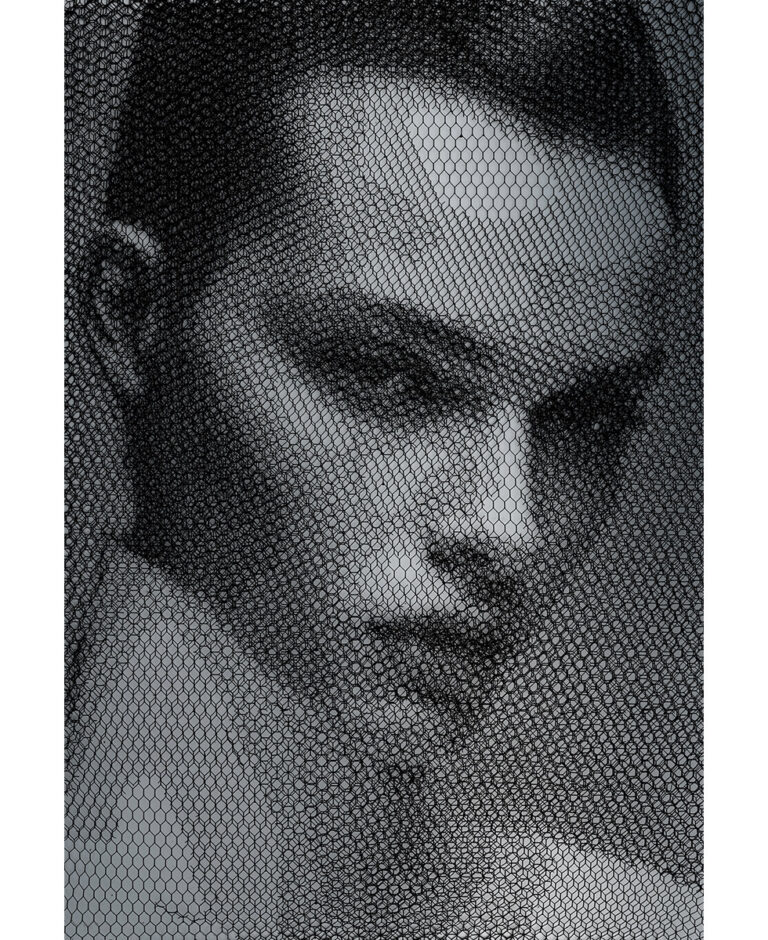
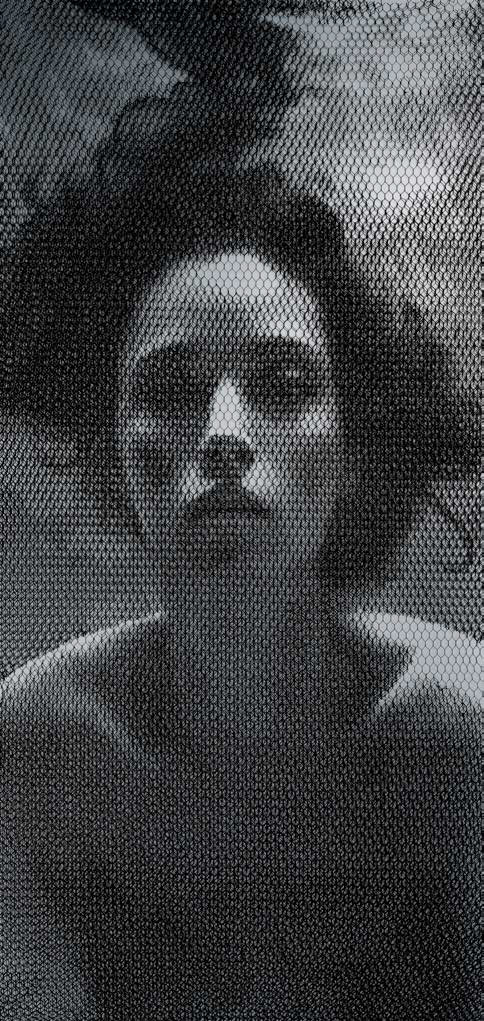
Transformation is what remains visible after a passage. It does not coincide with a return to a previous state, but with a new condition. It can be understood as an outcome — when something has already changed — or as a process in progress, when what is observed continues to evolve. In both cases, transformation is never absolute: it is always situated, tied to specific conditions, to time, to limits. Here, the body presents itself as a place of variation. It is both a field of intervention and a trace of what has occurred. It carries the signs of change, incorporates them, makes them part of its own form. The alcove space, while physically distinct, remains visually connected to the environment of intervention. It does not appear as an isolated space, but as a visible interior in which change manifests without being separated from the gesture that generated it. The grisaille decorations, with their suspended quality, create a dimension in which time seems slowed. The mythological scenes related to metamorphosis — such as that of Syrinx — do not only show the moment of transformation, but its persistence: what remains after the passage.
In this context, the mesh assumes a different function. It no longer highlights only the limit, but accompanies variation. Images emerge as outcomes of stratification: not original forms, but results of a process.The figures that inhabit this space — Hebe, Aglaia, Euphrosyne, Ganymede, and Tiresias — express different modalities of transformation: continuity, harmony, openness, elevation, profound change. They do not indicate a single direction, but a plurality of outcomes: different ways in which the body can change, adapt, redefine itself. Within this dimension also lies the contemporary transformation of the body, in which research does not only intervene, but concretely modifies the very conditions of experience. In this space, the body is configured as both outcome and new starting point, always in relation to the gesture that made it possible. Crossing this environment — in one direction or the other — one awareness emerges: to transform does not mean to separate from action, but to make its trace visible.
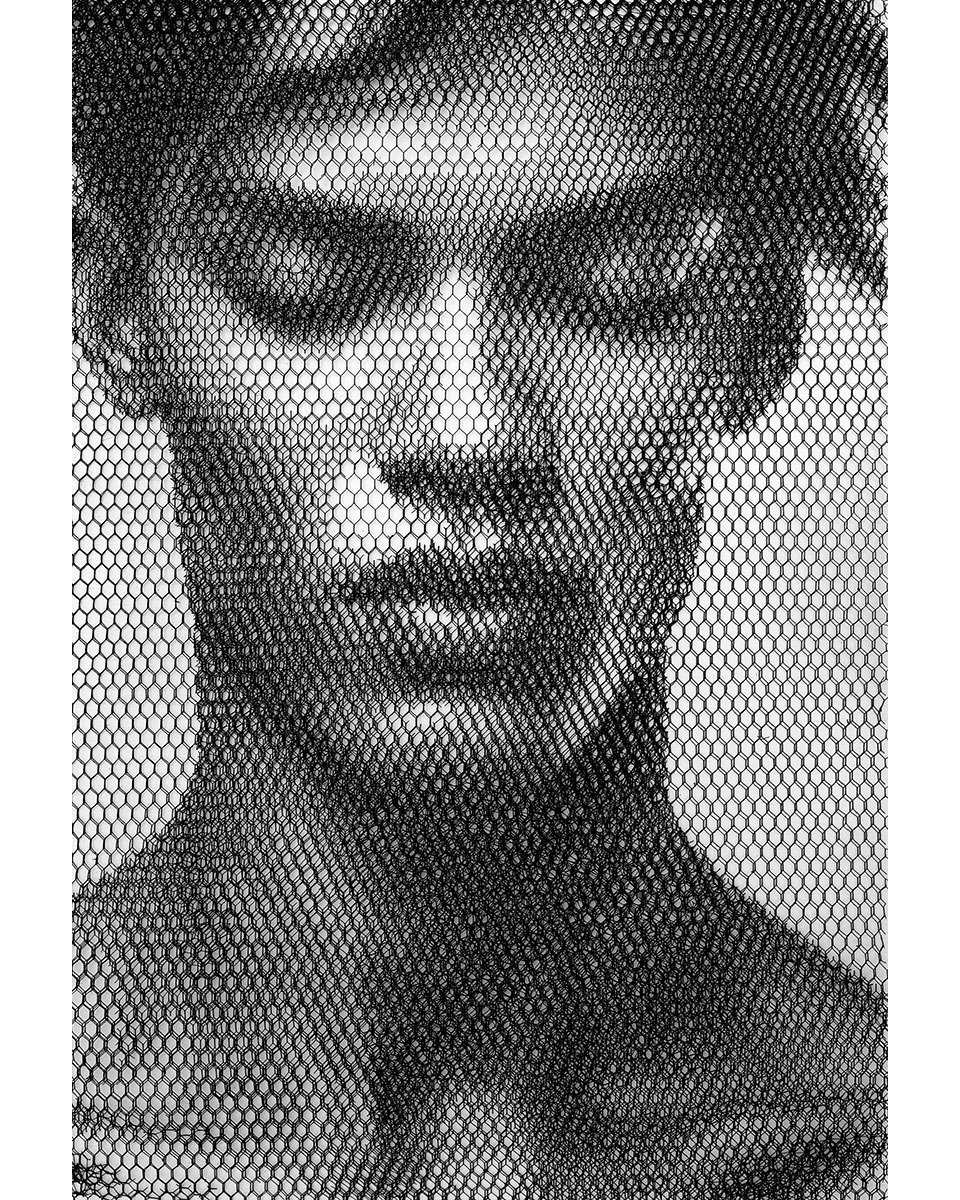
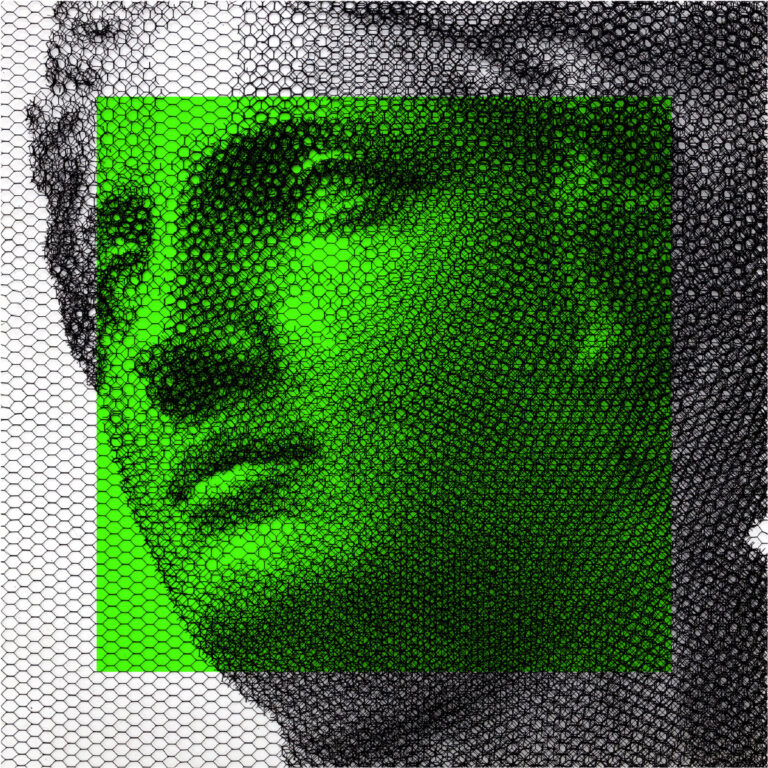
Hebe is the goddess of youth, the one who renews and preserves vitality. In mythology, she is associated with the continuity of life, with the maintenance of a condition that does not exhaust itself. She represents a transformation that manifests as time gained. Not a return to origin, but the possibility of continuing, of sustaining a quality of life. Change here is not spectacular, but profound: it concerns duration, the ability to go on. The metal mesh constructs a living image, crossed by a luminous tension. The face appears stable yet not static, as if sustained by an active balance.
EBE – VISTA 111360 (PAGAN POETRY), 2023
hand-cut black metal mesh on a paprika red and white background
90 × 90 cm.
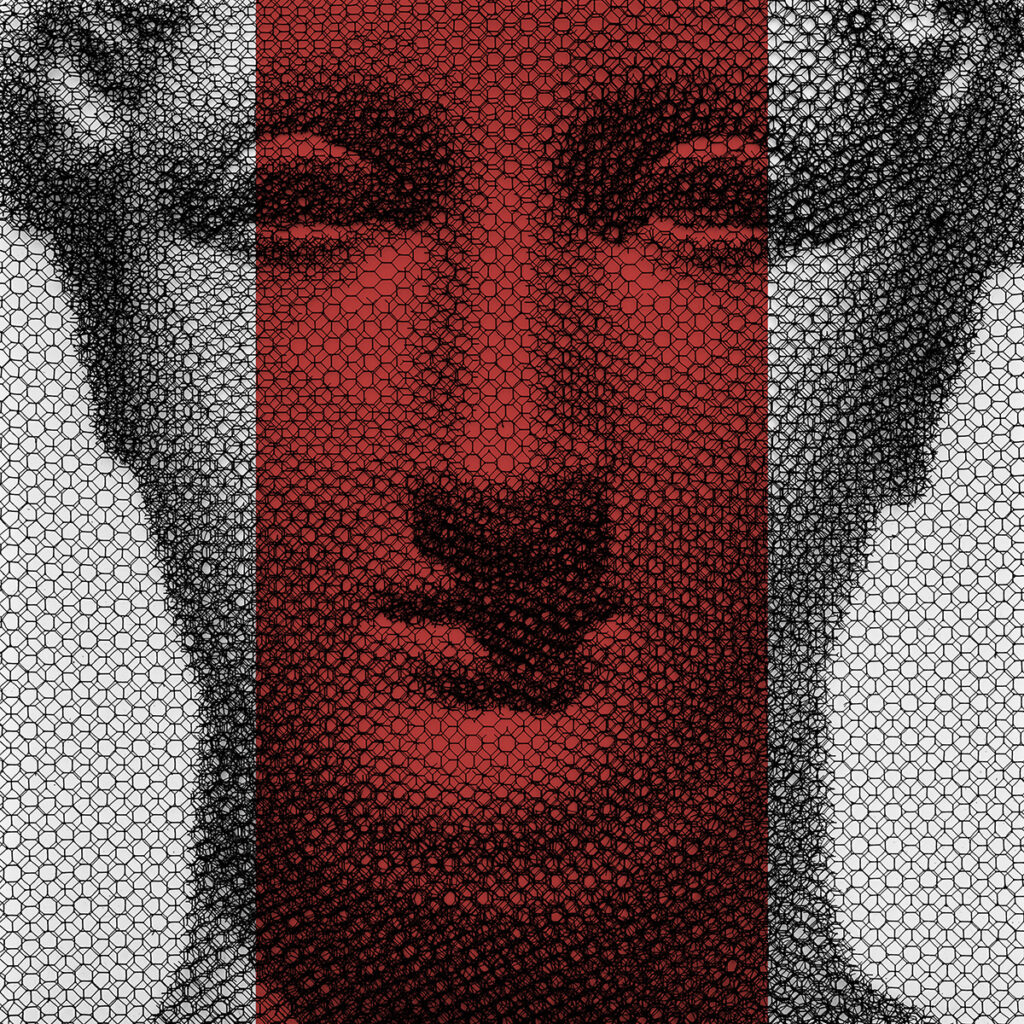
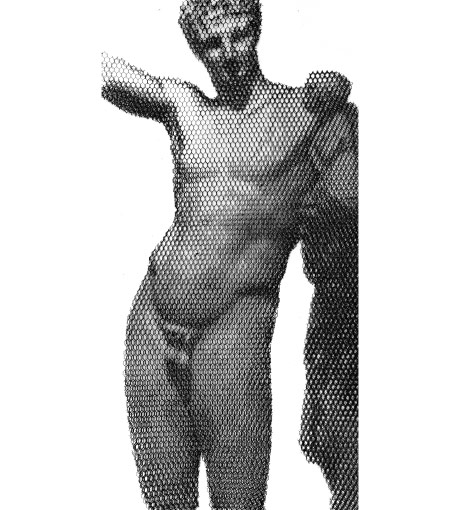
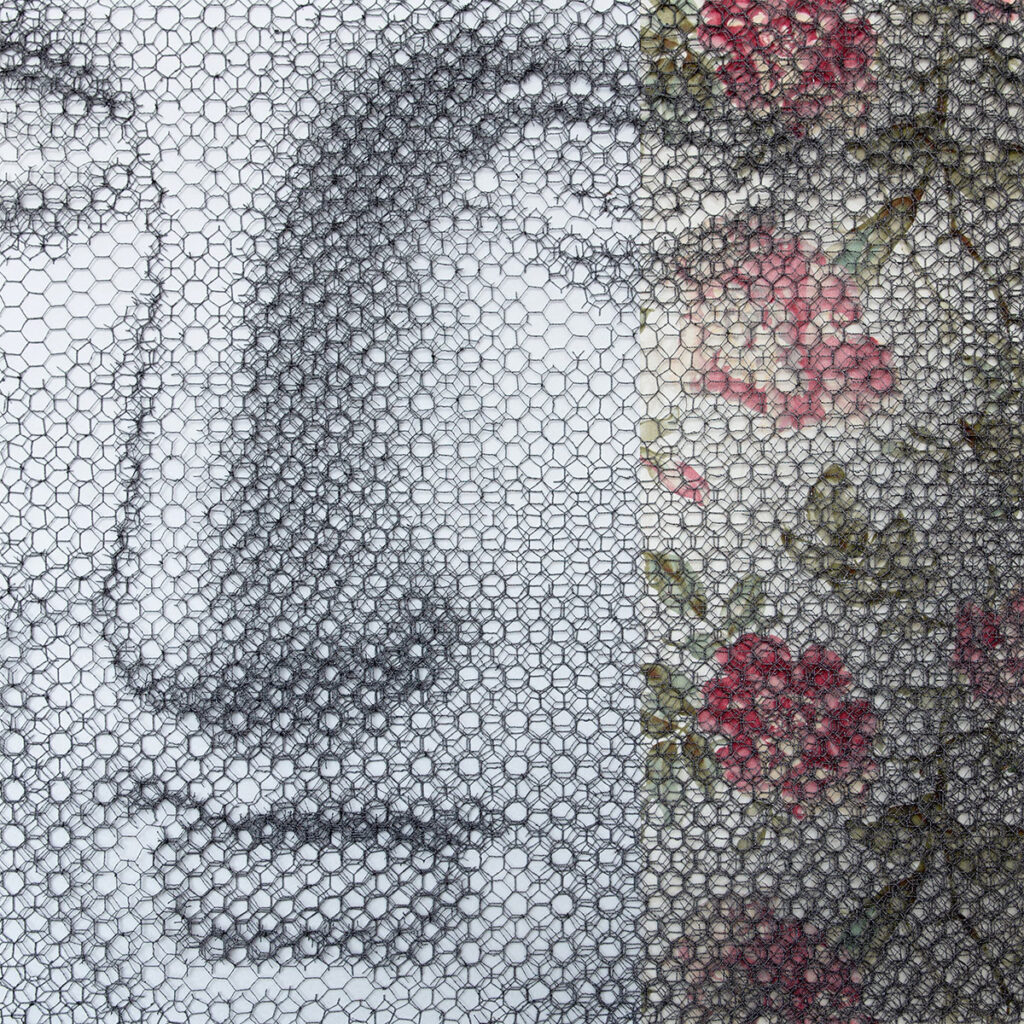
Aglaia is one of the Three Graces, associated with splendor, harmonious beauty, and grace as balance. It is not a constructed beauty, but a quality that emerges when forces find proportion. She represents transformation as recomposition: not addition, but harmonization. This figure introduces an outcome in which complexity is not eliminated, but made legible and balanced. The metal mesh conveys this condition through a soft, diffused presence. The image is not rigid, but appears stabilized by an internal relationship between its parts.
AGLAIA (PAGAN POETRY), 2020
hand-cut metal mesh on vintage wallpaper and a white background
80 × 80 cm
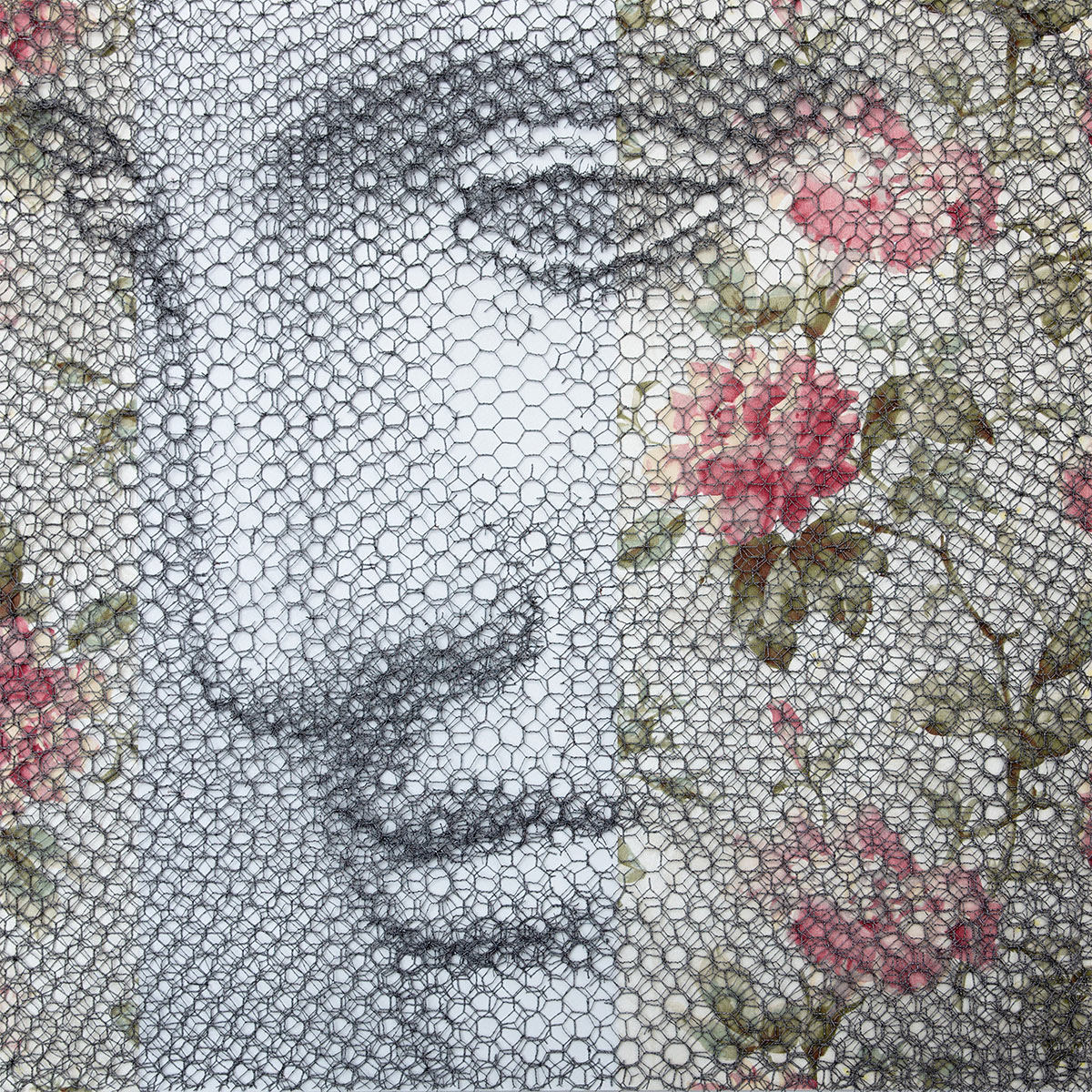
Euphrosyne, also one of the Three Graces, is associated with joy, lightness, and sharing. She represents a transformation that does not stop at stability, but opens to a renewed possibility of relation. Life is not only preserved, but made livable again. This dimension introduces a change that concerns the experience as a whole: not only the body, but the way it can be lived together with others. The metal mesh constructs a more open image, less restrained. The face appears lighter, as if crossed by a diffused quality.
EUFROSINE (PAGAN POETRY), 2020
hand-cut metal mesh on vintage wallpaper and a white background
80 × 80 cm.
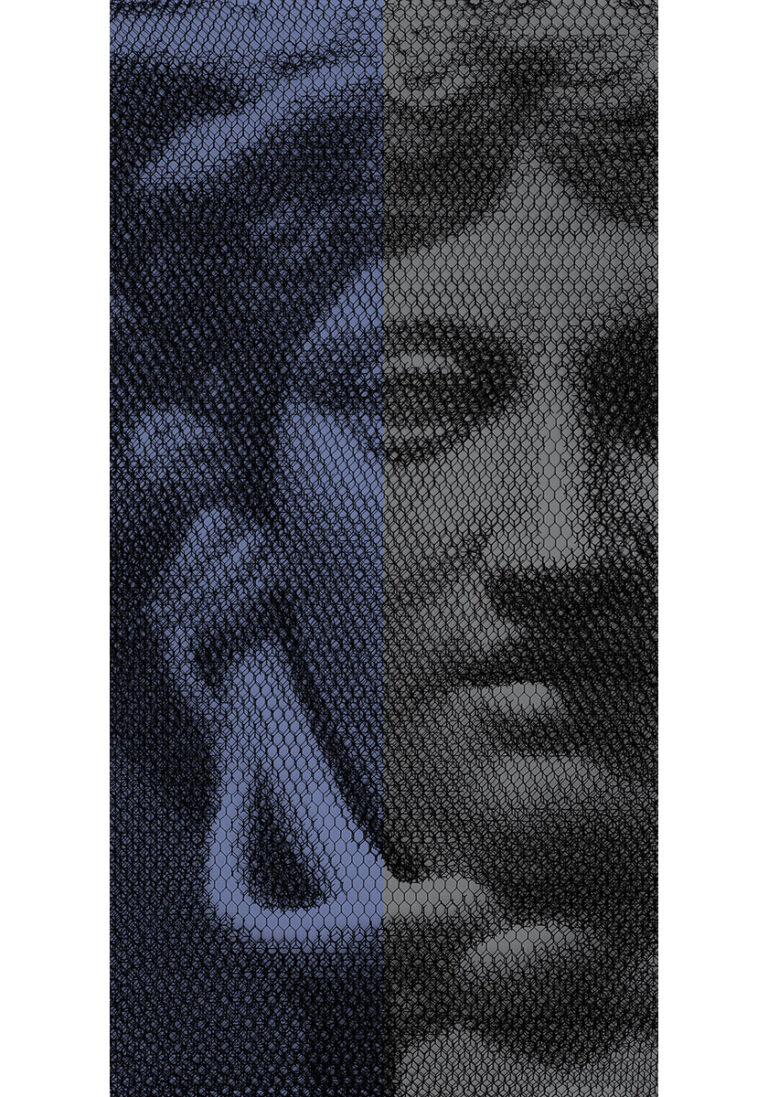
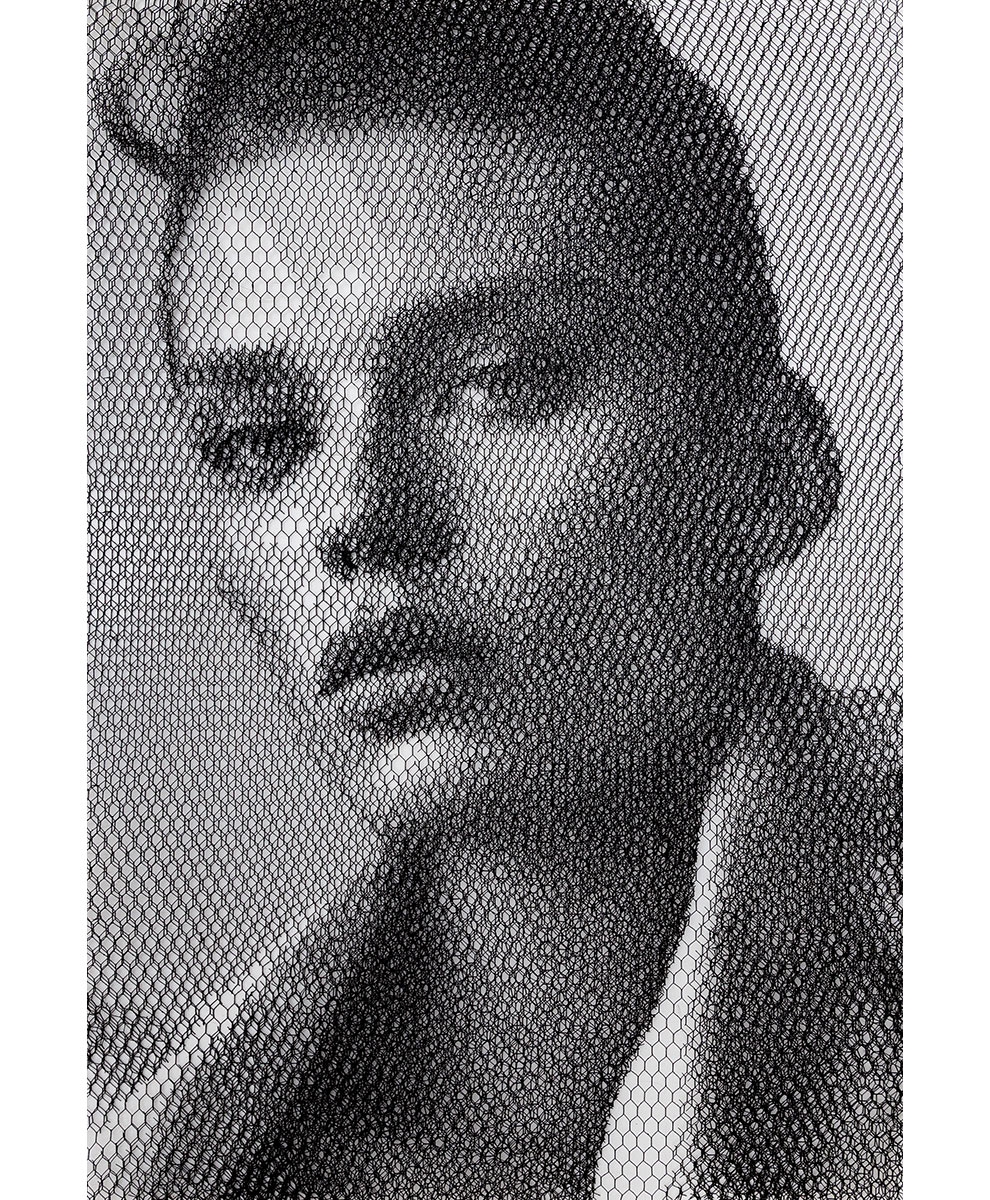
Ganymede is the young boy abducted by Zeus and brought to Olympus. His myth is linked to elevation, to the passage from a human condition to another dimension. He represents transformation as a change of state. It is not a gradual improvement, but a shift: a leap that completely redefines the condition. This figure introduces a vertical dimension of transformation: not only continuity, but transition toward a different level. As part of the Eídōlon series, the image does not derive from a historical model, but from algorithmic generation. This reinforces the idea of a form that is not stable, not tied to memory, but to possibility. The metal mesh conveys this suspension. The face appears as if lifted, not fully anchored, as if it belonged to another space.
GANYMEDE – ALGOR. 5742072 (EÍDŌLON), 2025
hand-cut black metal mesh on a white background
125 × 85 cm.
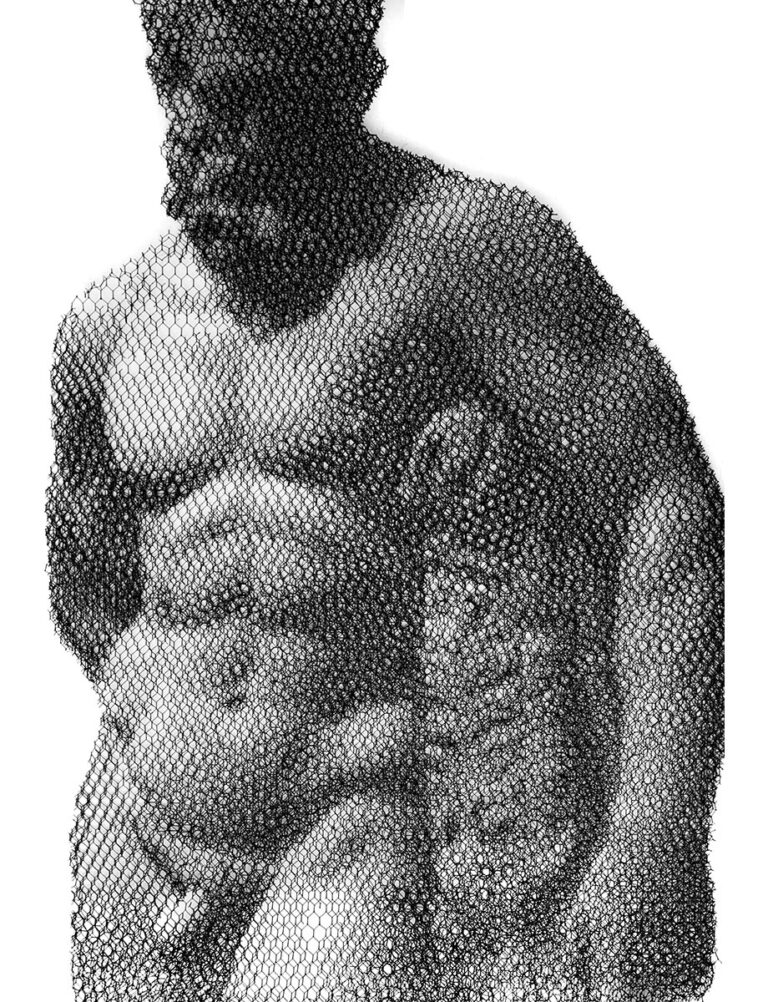
Tiresias is the blind seer, a complex figure who in mythology underwent profound transformations, living both as a man and as a woman. His knowledge does not derive from sight, but from experience. He is a figure who has known change from within, carrying the memory of passage. He represents a radical transformation: not only of the body, but of identity. What changes is not an external condition, but the very way of existing. This dimension introduces a form of knowledge that arises from traversal. It is not theoretical, but lived. The metal mesh constructs an essential image, almost reduced to its primary structure. The face appears as bearer of an intense presence, not immediate, requiring time to be grasped.
TIRESIAS – ALGOR. 5072052 (EÍDŌLON), 2025
hand-cut black metal mesh on a white background
125 × 85 cm.