 Experience
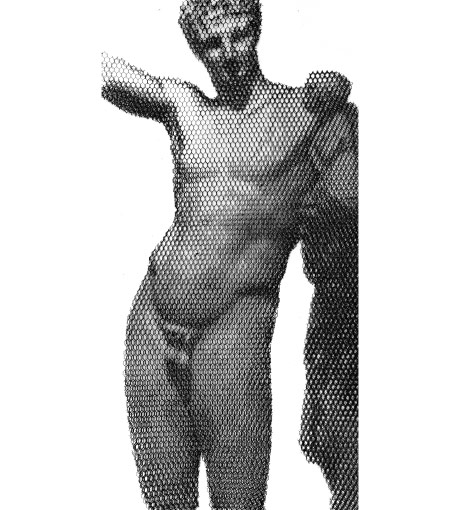
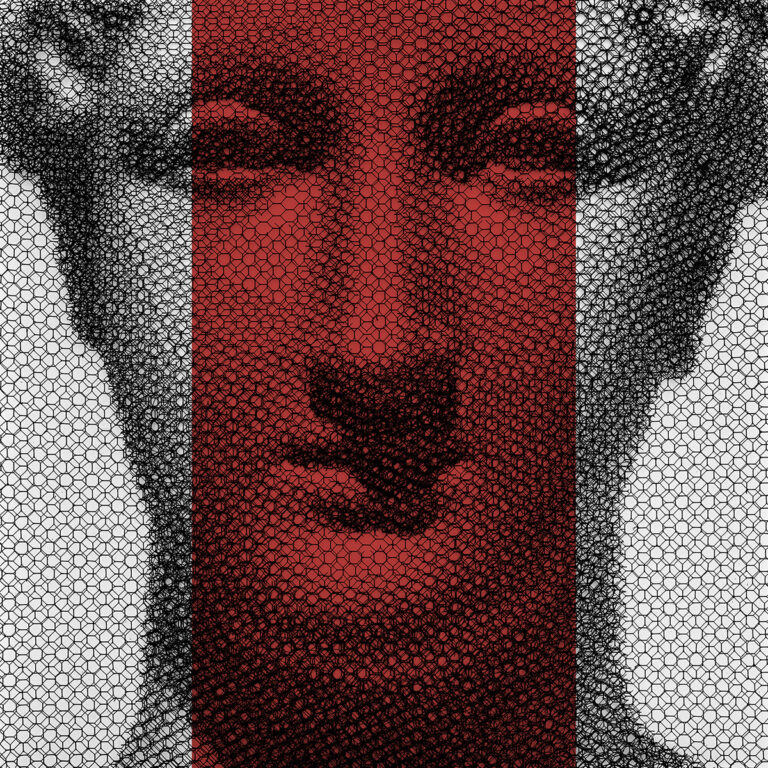
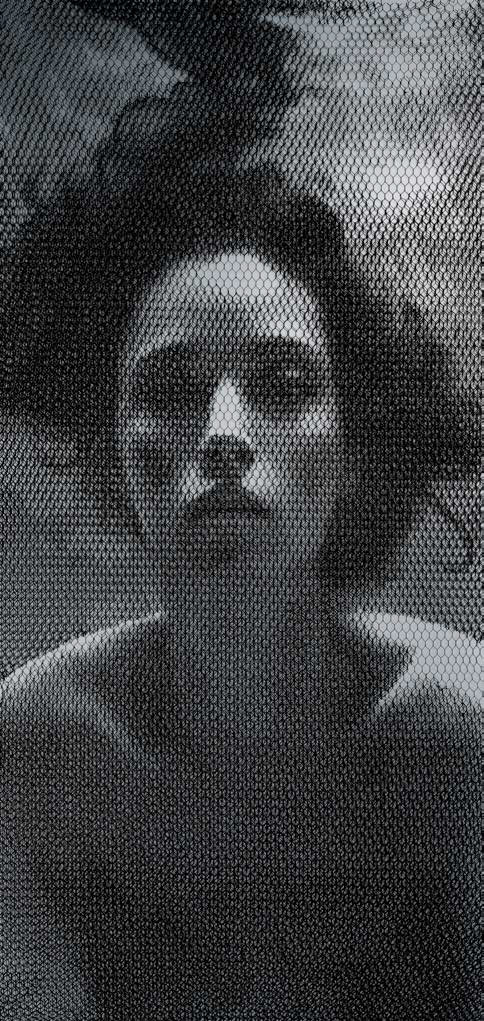
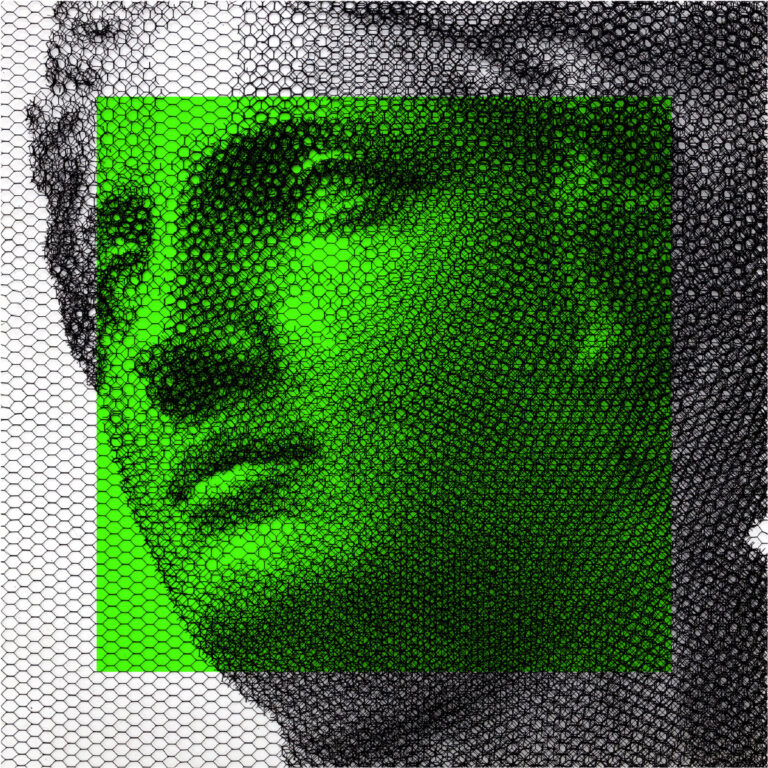
Intervention is the moment in which confrontation with reality becomes inevitable. It is not only a gesture, but a condition: a threshold in which what happens demands a response. It can be understood as necessity — when a situation imposes a position — or as an act already accomplished, when what is observed reveals the trace of a previous action. In both cases, intervention is never free from constraints: it always measures itself against what resists. Here, the body presents itself as a place of tension. It is no longer only a field of possibility nor a simple object of knowledge, but a space in which limitation becomes visible. What can be modified coexists with what cannot be avoided. The space that hosts this section makes this condition tangible. The environment is structured around the alcove, which introduces a visual separation without constituting a real discontinuity. One enters a threshold: a space in which the gesture takes form, yet where its outcome can already be glimpsed. The grisaille decorations, with their suspended and monochrome tones, contribute to this concentration. The mythological scenes — including Pan and Syrinx — highlight the critical moment in which something breaks or deviates, opening toward transformation. In this context, the mesh assumes a precise function. It is no longer only connection or generation, but a structure that makes the limit visible. It holds, resists, reveals the constraints within which every action must operate. The figures that inhabit this space — Nemesis, Ananke, and Persephone — represent three modes of intervention: rebalancing, necessity, traversal. They do not indicate absolute freedom, but conditions within which it is possible to act. Intervention does not eliminate complexity, but moves through it, seeking to modify its outcome. Within this dimension also lies contemporary intervention on the body, which operates within complex systems where every decision implies responsibility. In this space, the body is configured as the place where a choice takes form under pressure, where the relationship between gesture and outcome becomes visible. Crossing this threshold — in one direction or the other — one awareness emerges: to intervene means to confront what cannot be completely controlled.
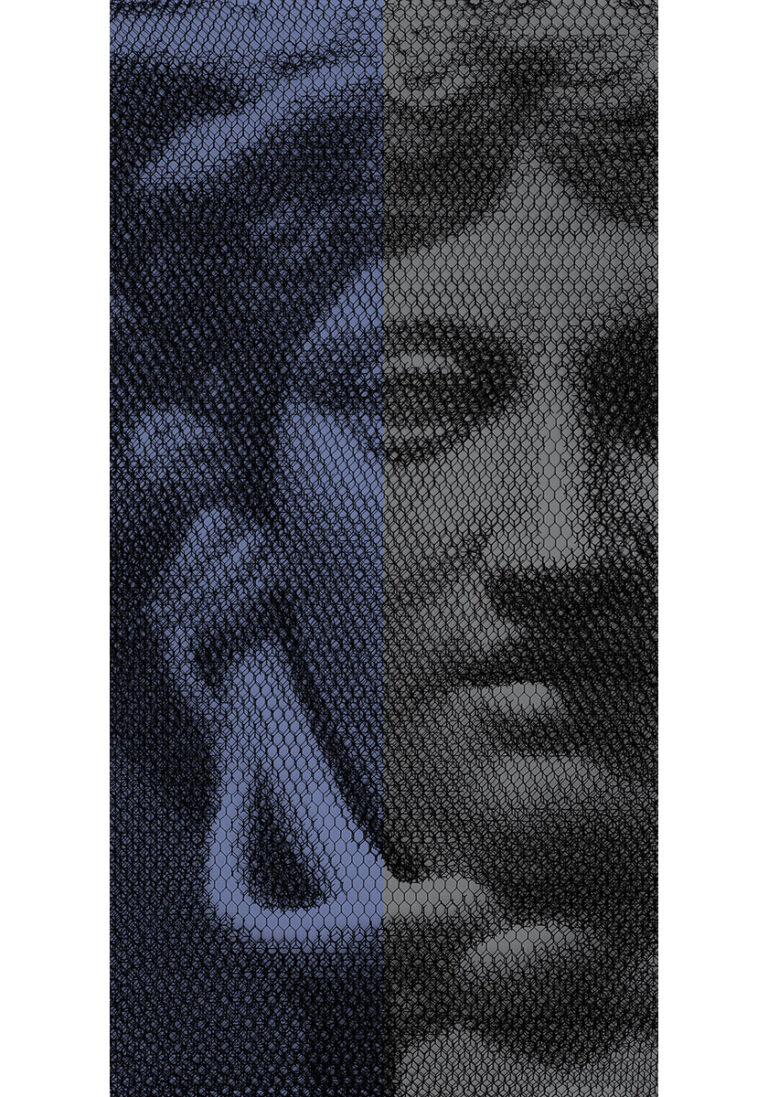
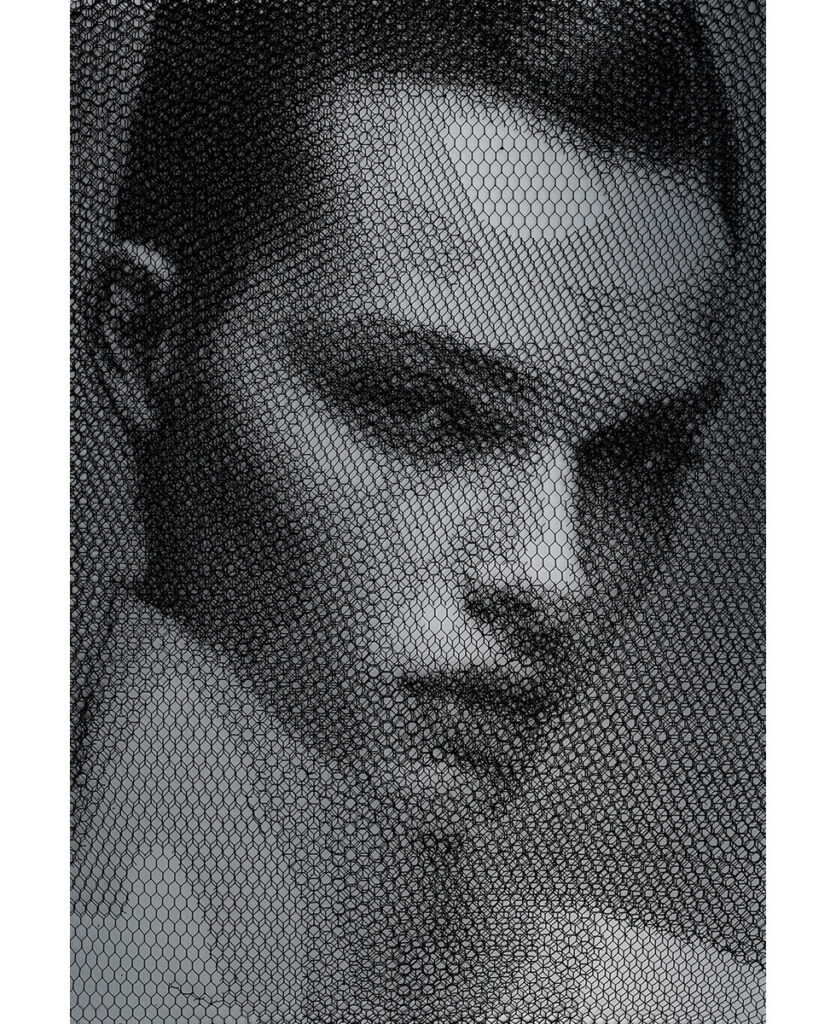
Nemesis is the goddess of rebalancing. In Greek mythology, she intervenes when an order is broken, when excess disrupts measure. She is not vengeance in the common sense, but the restoration of proportion. She represents a form of intervention that does not erase conflict, but brings it back within a sustainable threshold. What is out of balance is returned to a governable condition. This dimension introduces the idea of intervention as regulation. Change does not occur through elimination, but through the realignment of forces at play. The metal mesh constructs a contained, restrained image. The face appears stabilized, as if brought back into measure through the structure that supports it.
NEMESI – ALGOR. 5281854 (EÍDŌLON), 2024
hand-cut black wire mesh on metallic grey background
125 × 85 cm.
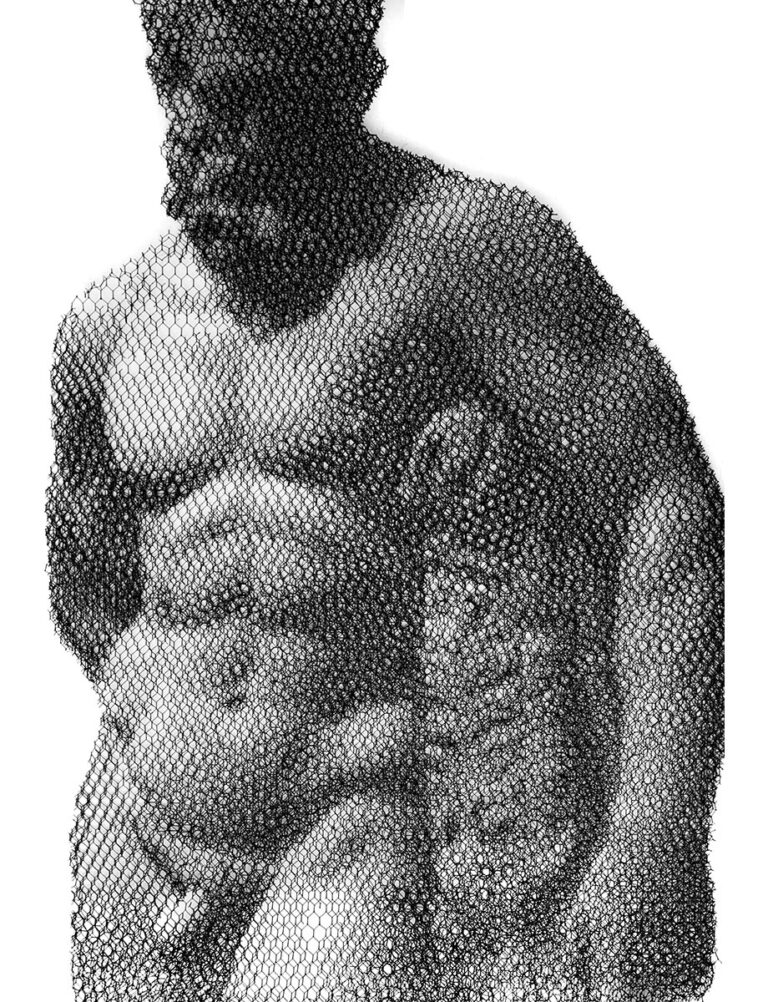
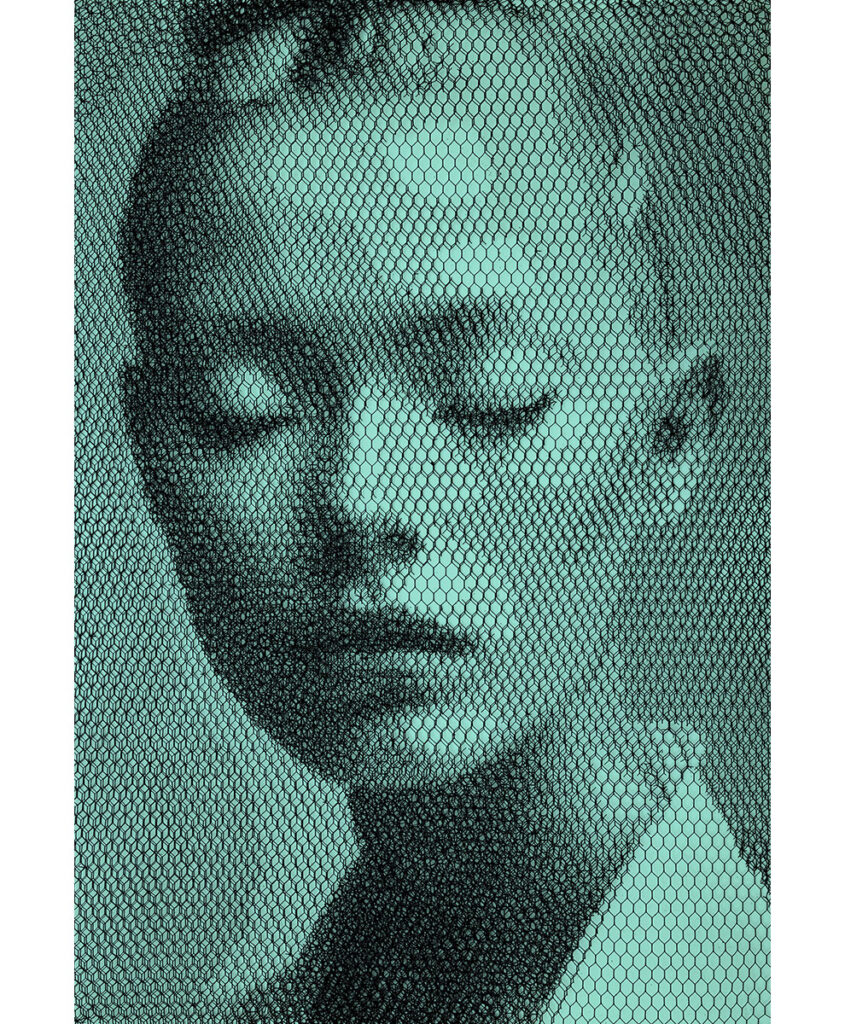
Ananke is the personification of absolute necessity. In Greek tradition, she is a primordial force, predating even the Olympian gods, representing what cannot be avoided or altered. She is not a deity that acts, but a condition that imposes itself. Everything that happens is, in some way, inscribed within her logic. She represents a level at which intervention does not arise from choice, but from an inevitable confrontation with reality. The limit is not external, but structural. This figure introduces a more radical awareness: not everything can be freely transformed. There are conditions that must be faced, that define the very field of action. The metal mesh makes this tension visible. The image appears contained, as if inscribed within a structure that cannot be overcome, but only inhabited.
ANANKE – ALGOR. 2001675 (EÍDŌLON), 2024
hand-cut black wire mesh on aquamarine background
125 × 85 cm.
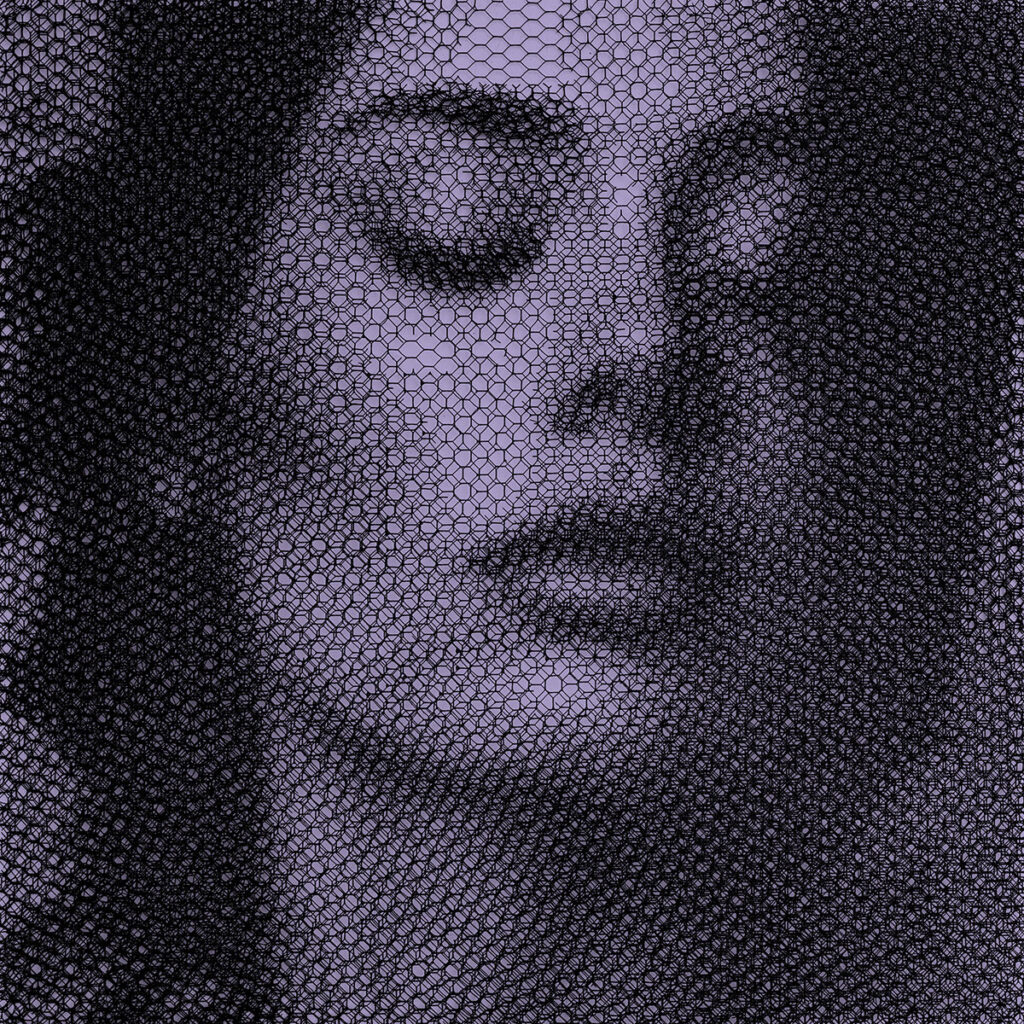
Persephone is the daughter of Demeter, abducted by Hades and taken to the underworld. Her myth is linked to the cycle of the seasons: her descent marks loss, her return marks rebirth. She is a figure of passage, belonging simultaneously to two worlds: the surface and the depth, life and absence. She represents intervention as traversal. It does not eliminate the condition, but moves through it. Change occurs in the very act of crossing, in the ability to pass through a phase without being permanently absorbed by it. This dimension introduces a processual transformation: what happens modifies the initial condition, producing a new form of balance. The metal mesh conveys this dual belonging. The face appears suspended, as if in transit between two states. The image is not fully stable, but crossed by a threshold.
PERSEPHONE – ALGOR. 5311940 (EÍDŌLON), 2025
hand-cut black wire mesh on wisteria background
90 × 90 cm.