 Knowledge
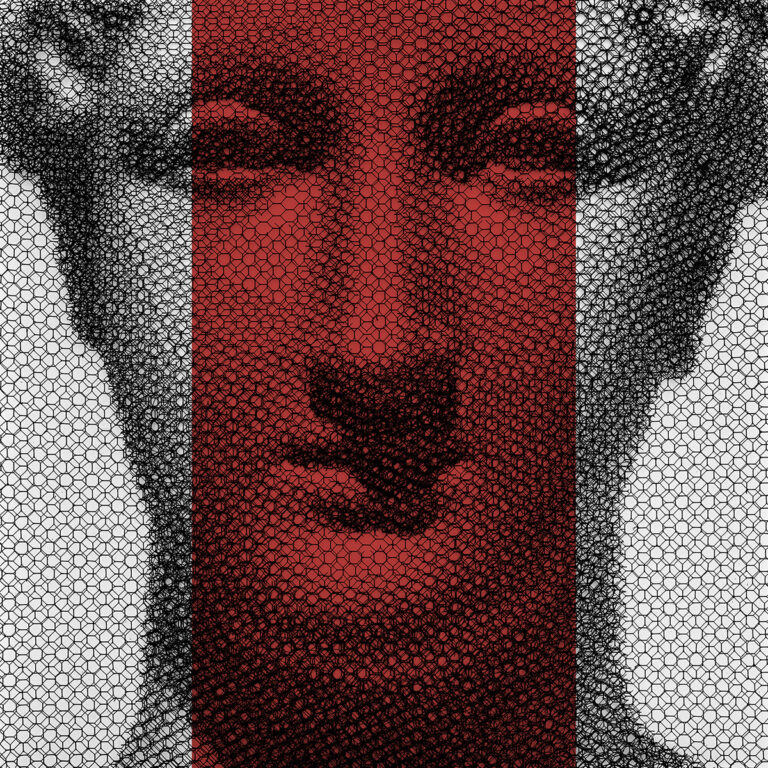
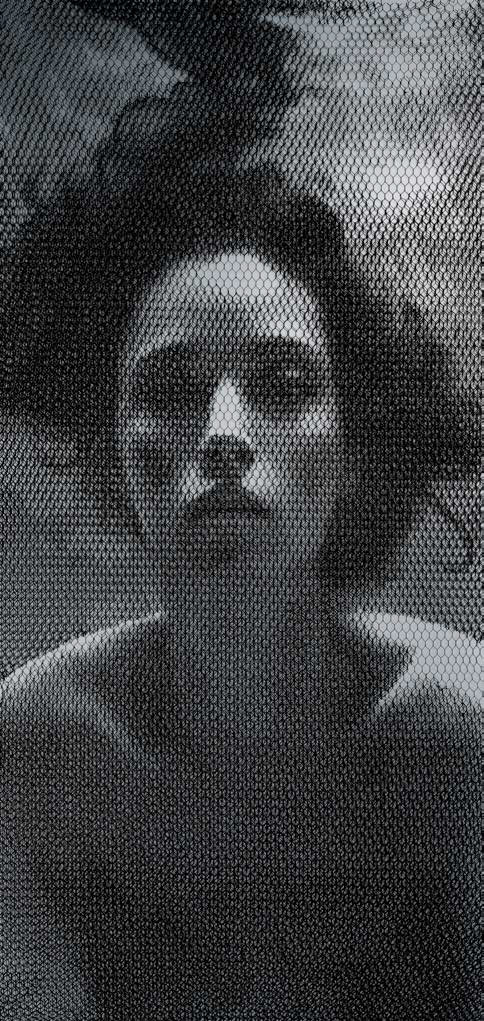
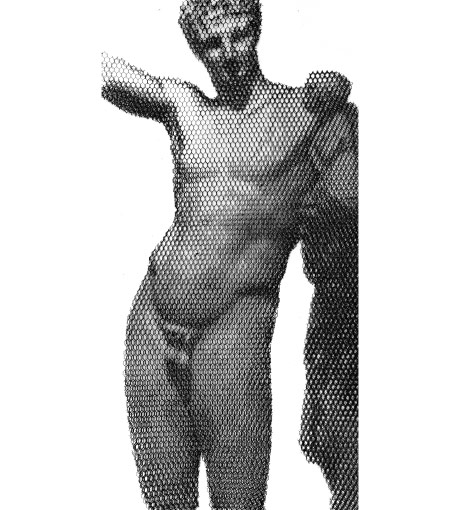
Experience is the point where everything happens — or the place where everything returns.
It can be crossed as an origin, when the body is still presence, perception, exposure, before any interpretation. Or as an outcome, when what has been traversed recomposes itself in the possibility of living again, of feeling, of recognizing oneself.
At this threshold, the body is not yet an object of knowledge nor a field of intervention. It is vulnerability, desire, identity in formation. It is not defined, but crossed by forces: biological, emotional, relational.
The space that hosts this section fully reflects this condition. The painted boiserie decoration, with its soft and diffused tones — powder pink, bluish grey — creates an environment in which there is no dominant scene nor a central narrative. Garlands, classical profiles, and mythological heads are distributed throughout the space without hierarchy, shaping a continuous and enveloping visual system.
The environment does not guide the gaze, but accompanies it. It does not impose a reading, but suggests a presence. As in perception, images do not present themselves as defined data, but as progressive apparitions, immersed in a wider field.
The mesh, here, manifests as a primary condition. It does not organize, does not select: it envelops. It is a weave of relations, an invisible system of connections that precedes any interpretation. As in life, every experience emerges from an intertwining of environment, memory, perception, and time.
In this sense, the decorative space itself behaves like a network: a diffuse, non-hierarchical system in which each element exists in relation to the others without constituting a dominant center.
The figures that inhabit this space — Demeter, Niobe, Hymnos, Bathos, Mageia, Flora, Bacchus, Aphrodite, Nymph, and Eros — do not describe states, but conditions: nourishment, loss, immersion, depth, enchantment, growth, excess, beauty, apparition, desire.
They do not represent the body: they expose it.
Within the exhibition path, this room takes on a particular role. It is not simply a starting point, but a threshold: for those who enter, it is the origin of experience; for those who return, it is the place where what has been traversed recomposes itself.
Within this original condition also lies a first contemporary attention to the body: not yet intervention, but prevention, quality of life, possibility of listening. Experience precedes diagnosis, just as perception precedes knowledge.
Crossing this space, in any direction, one awareness emerges: before being understood, analyzed, or transformed, the body is always lived.
And even when the path seems to end, it is from here that everything begins again.
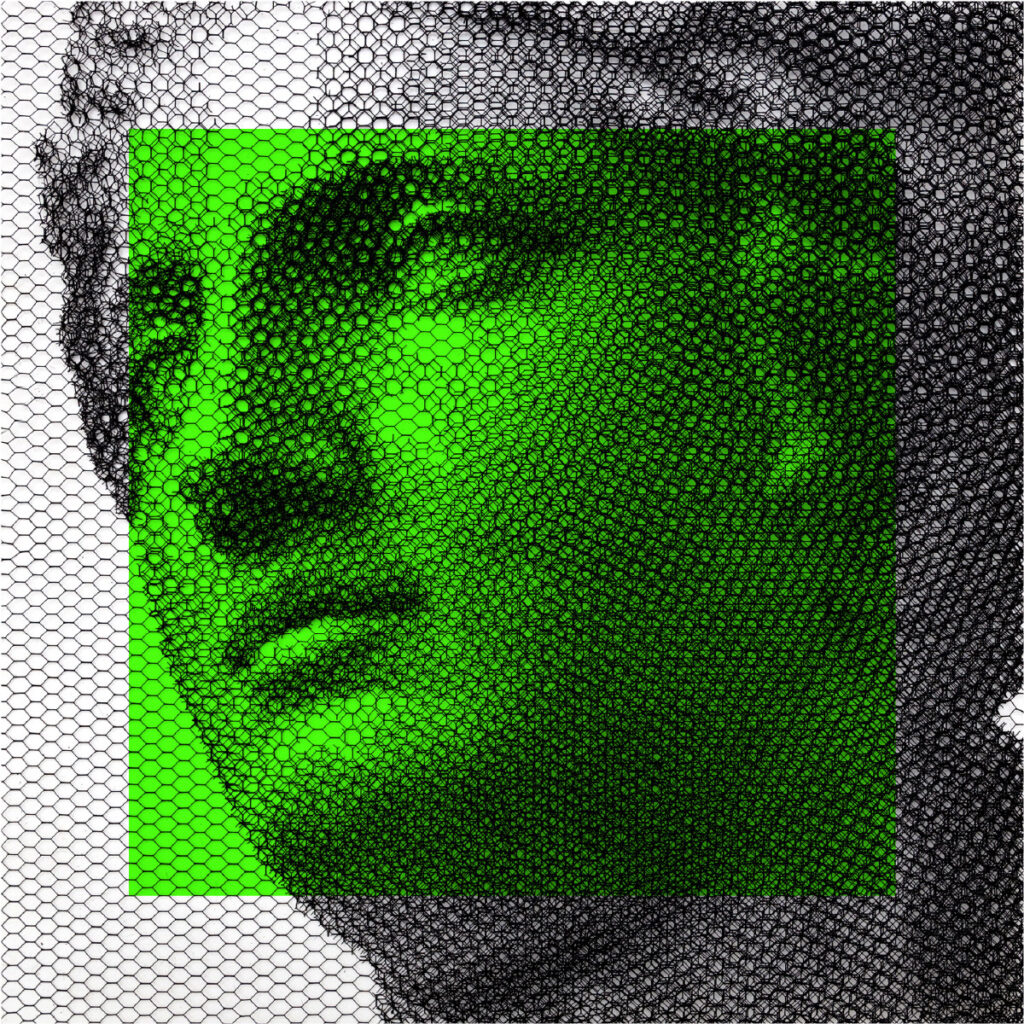
Demeter, in Greek mythology, is the goddess of fertile earth, harvest, and nourishment. She is the figure who ensures the continuity of life through natural cycles: growth, loss, regeneration. Her myth is deeply connected to the body as a place of dependence and relation — with the earth, with time, with what allows life to exist.
Demeter represents the most primordial dimension of health: not as intervention, but as a condition of possibility. Before care, before diagnosis, there exists a fragile balance that sustains life — made of nourishment, environment, rhythm, and relation. In this perspective, the body is not yet an object of observation, but a living system immersed in a broader context.
Her presence introduces an idea of health that does not coincide with the mere absence of disease, but with a vital continuity. In this sense, the dialogue with contemporary research unfolds on a broader level: that of prevention and quality of life, understood as diffuse conditions that precede and make necessary any medical intervention.
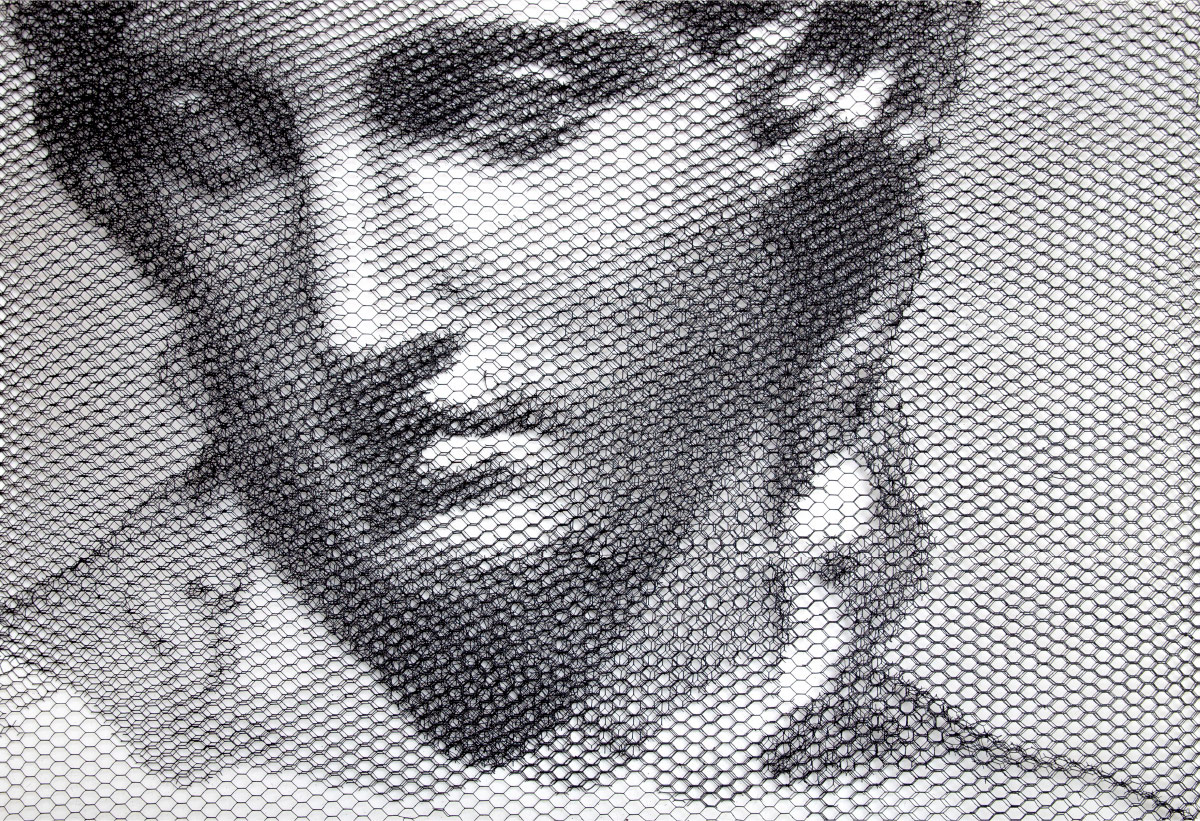
The image emerges from the metal mesh as from an organic weave: not an isolated face, but a presence that seems to surface from a wider field. The mesh here is not only a visual filter, but suggests a system of interdependencies — biological, environmental, invisible — that make the very existence of the body possible.
DEMETRA – VISTA 061786 (PAGAN POETRY), 2024
hand-cut black wire mesh on white and fluorescent green background
95 × 95 cm
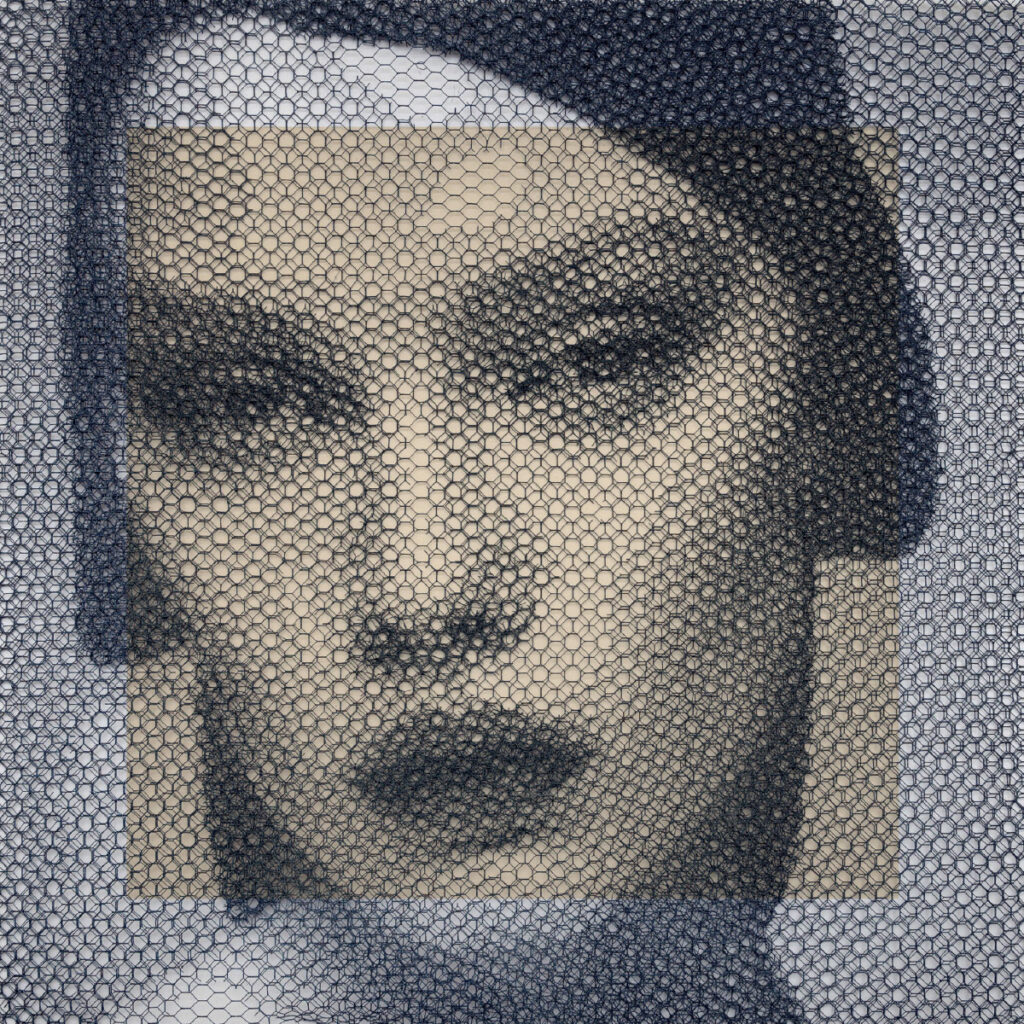
Niobe, in Greek mythology, is a tragic figure. A queen and a mother, she is punished for her hybris — the pride of having dared to compare herself to a goddess — with the loss of her children. The pain that follows is absolute, unbearable, until it transforms her into stone. Her image has remained in history as a symbol of human suffering and exposed vulnerability.
Niobe introduces the body as a place of loss. No longer only a condition of life, but a space where limitation, fragility, and rupture manifest. Pain here is not yet interpreted nor resolved: it is pure experience, a direct passage through what exceeds control.
This presence is essential in defining the starting point of the journey: every research begins from a condition of necessity. Suffering is not an abstraction, but a real fact that demands a response. In this sense, the figure of Niobe evokes the will to reduce, understand, and transform what appears irreversible.
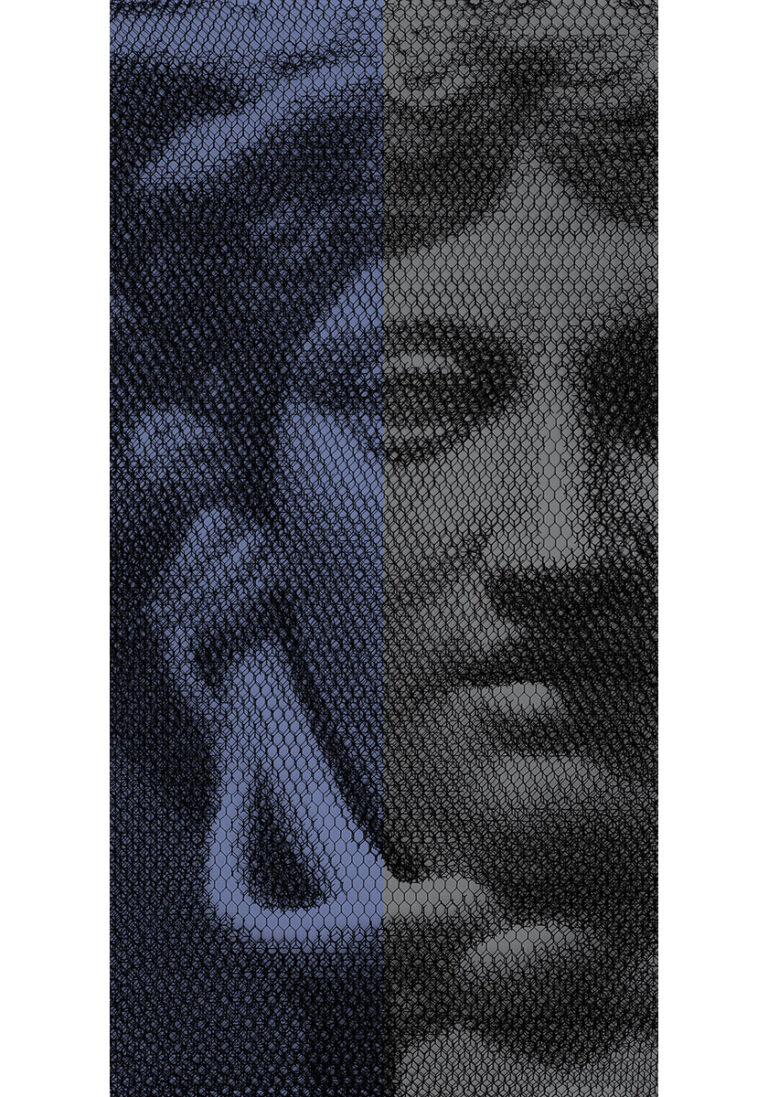
The metal mesh holds and fragments the face, intensifying its internal tension. The image is not compact, but crossed by a subtle vibration, as if the form itself were on the verge of yielding. The mesh becomes here a threshold between presence and dissolution, between body and loss.
NIOBE – ALGOR. 1791542 (EÍDŌLON), 2024
hand-cut indigo wire mesh on ivory and white background
95 × 95 cm
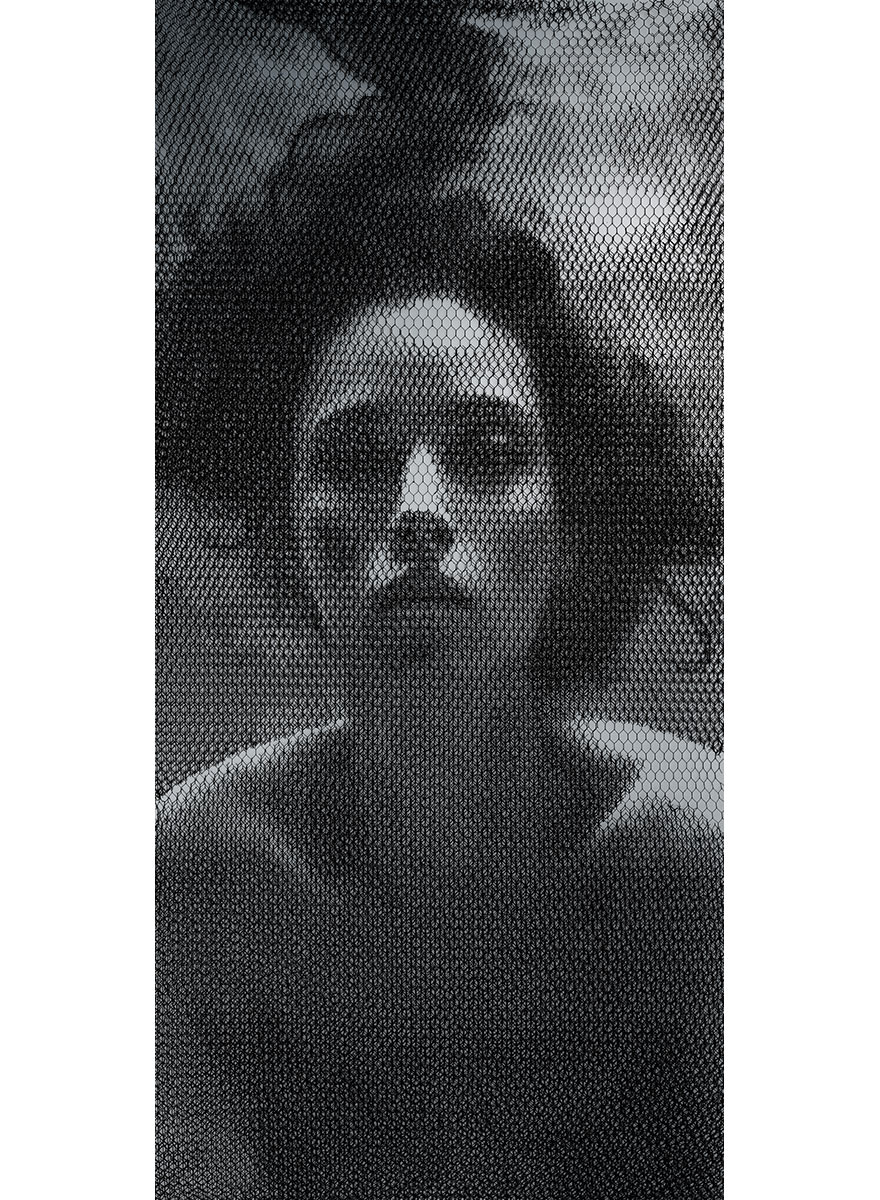
Hymnos evokes a condition of suspension: the passage between wakefulness and surrender, between control and immersion. In this figure, however, this threshold takes on an additional symbolic layer: that of the Sirens.
In ancient tradition, the Sirens are not merely seductive creatures, but liminal presences, linked to the boundary between life and death, between knowledge and loss. Their song is not superficial deception, but an attraction toward another, deeper dimension, in which the individual dissolves and transforms.
Hymnos can be read in this direction: as a state of absolute listening, in which the body exposes itself to a voice it does not control. There is not yet interpretation, but a willingness to be crossed. It is a condition in which experience becomes passive and receptive, as happens before the sea: a space that cannot be dominated, but only listened to.
In this sense, the sea is the first great network in history: a surface of connection between peoples, cultures, exchanges, but also a place of loss, risk, and the unknown. The Sirens inhabit this ambivalence. They are the voice of connection and, at the same time, of its danger.
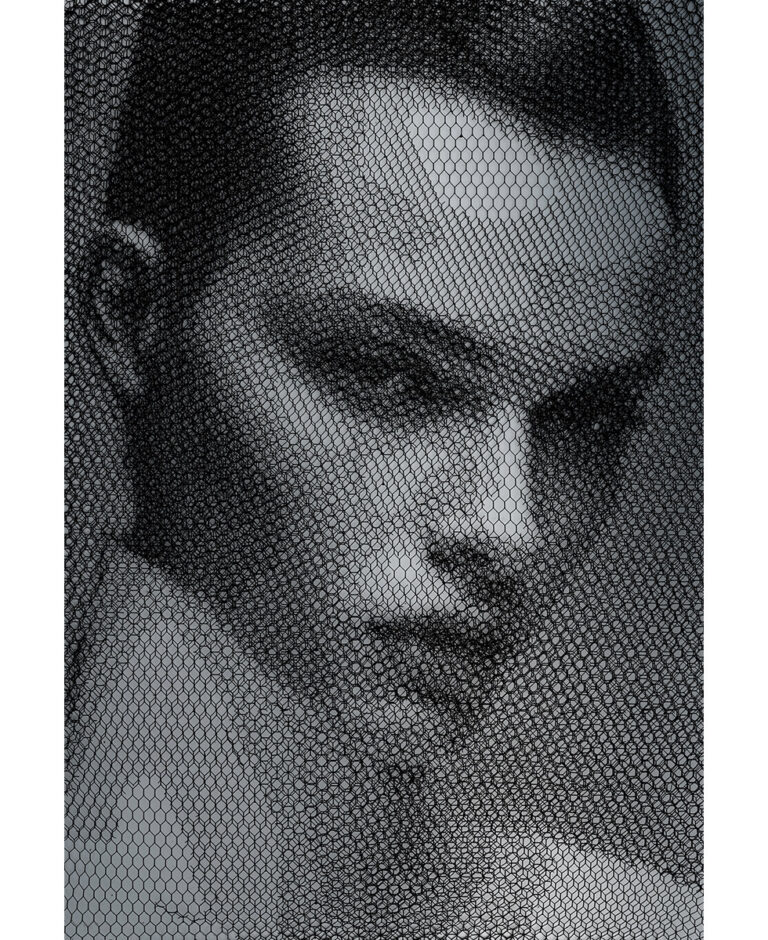
The steel surface reflects and destabilizes the image, while the metal mesh holds back its emergence. The face appears as if called from a depth that cannot be seen, but can be perceived.
HYMNOS (EÍDŌLON), 2025
hand-cut black wire mesh on stainless steel background
190 × 90 cm.
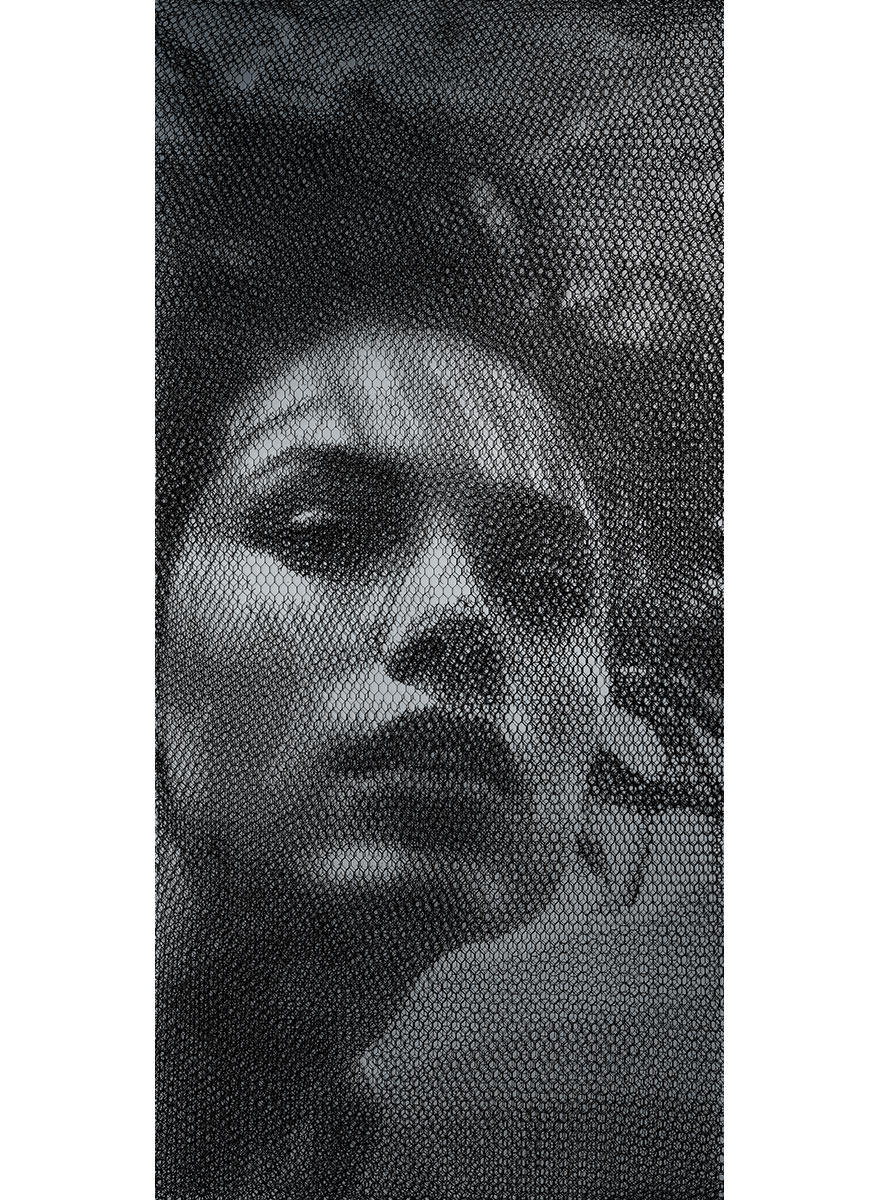
Bathos is depth, descent. It does not describe a space, but a movement: going beneath the surface, entering a dimension in which references are lost and perception changes. In this perspective, the figure approaches the darker dimension of the Sirens. No longer the call, but what follows: the descent, the immersion, the loss of orientation. The sea is no longer a surface of exchange, but an internal, unfathomable space. The Sirens, in this reading, are not only a voice, but a threshold toward a knowledge that cannot be possessed without transformation. Entering depth means renouncing distance, accepting a total relationship with what cannot be controlled. The sea returns here as a primary space of connection between civilizations, but also as an archive of what disappears, of what does not return. A structure that connects and, at the same time, retains. The image constructed by the metal mesh is never completely stable. The face emerges and withdraws, as if immersed in a fluid matter. The reflective surface amplifies this sense of instability, making a definitive point of view impossible.
BATHOS (EÍDŌLON), 2025
hand-cut black wire mesh on stainless steel background
190 × 90 cm.
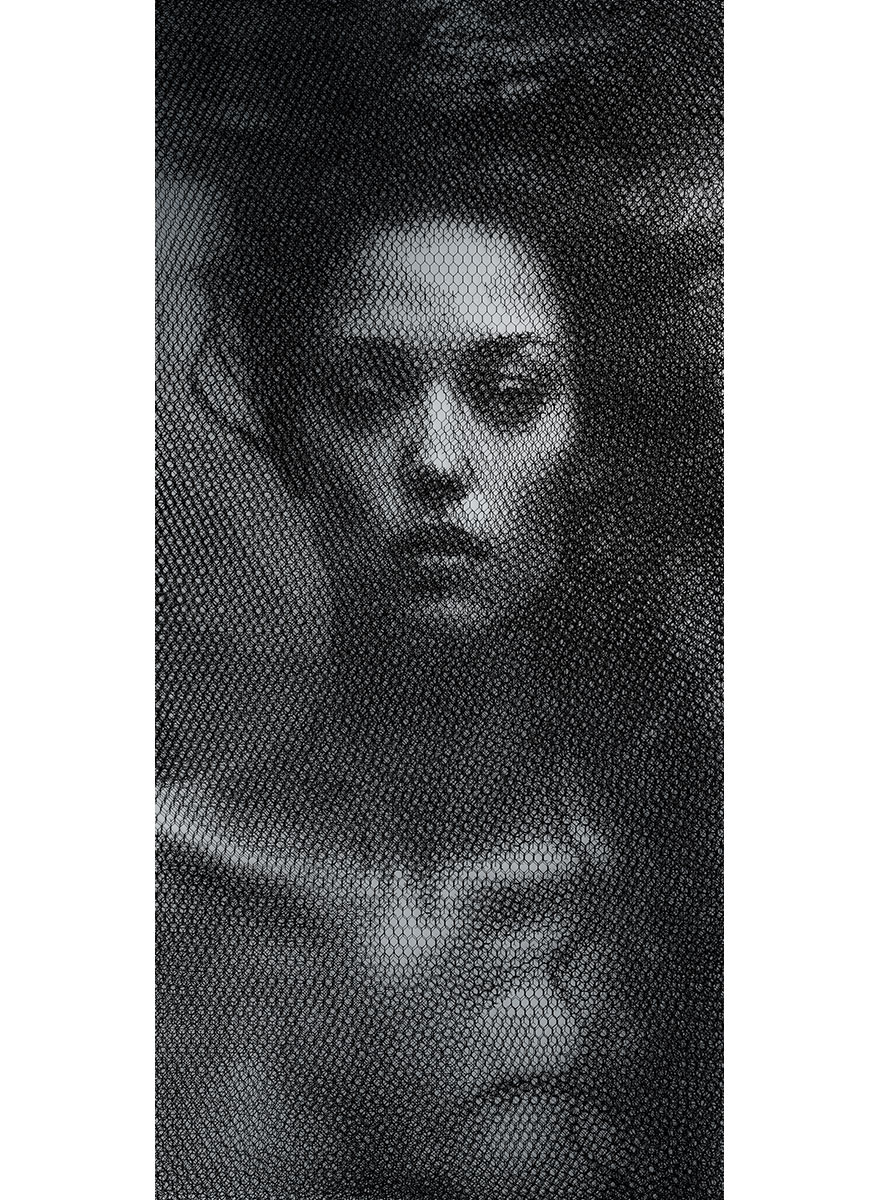
Mageia introduces a different dimension: no longer only immersion or loss, but revelation. It is enchantment understood as the ability to make a form emerge from what appears indistinct. Here too the relationship with the Sirens is present, but it shifts to the level of knowledge. Their song, in tradition, is not only seduction, but a promise of knowledge: to know all that has been, all that happens. A knowledge that does not offer itself without consequences. Mageia can be read as the moment in which this complexity becomes legible. It is not eliminated, but traversed. The image takes shape without losing its ambiguity. The sea remains decisive: a space of connection between worlds, but also a place where information travels in a non-linear way, through currents, routes, deviations. A fluid network, not visible, yet extremely concrete. The metal mesh operates in this direction: it selects, filters, allows to emerge. The face appears as constructed through a system of relations, more than from a solid form. It is an image that does not impose itself, but gradually reveals itself.
MAGEIA (EÍDŌLON), 2025
hand-cut black wire mesh on stainless steel background
190 × 90 cm.
Flore is the figure of blooming, of growth made visible. It does not represent an origin nor an outcome, but the moment in which life becomes manifest, when what was potential takes form. The body appears here as an active process, capable of developing, adapting, responding. It is not a static condition, but a dynamic balance, continuously redefined in relation to what surrounds it. This dimension introduces an idea of health as generative capacity: not simple preservation, but the possibility of expansion. To live also means to grow, to transform, to pass through time without interrupting one’s movement. The metal mesh conveys this openness. The face emerges with a diffuse lightness, as if crossed by a force pushing it outward. The image is not closed, but in continuous expansion, both held and released by the structure that generates it.
FLORE – ALGOR. 7152003 (EÍDŌLON), 2025
hand-cut black wire mesh on butter-white background
125 × 85 cm.
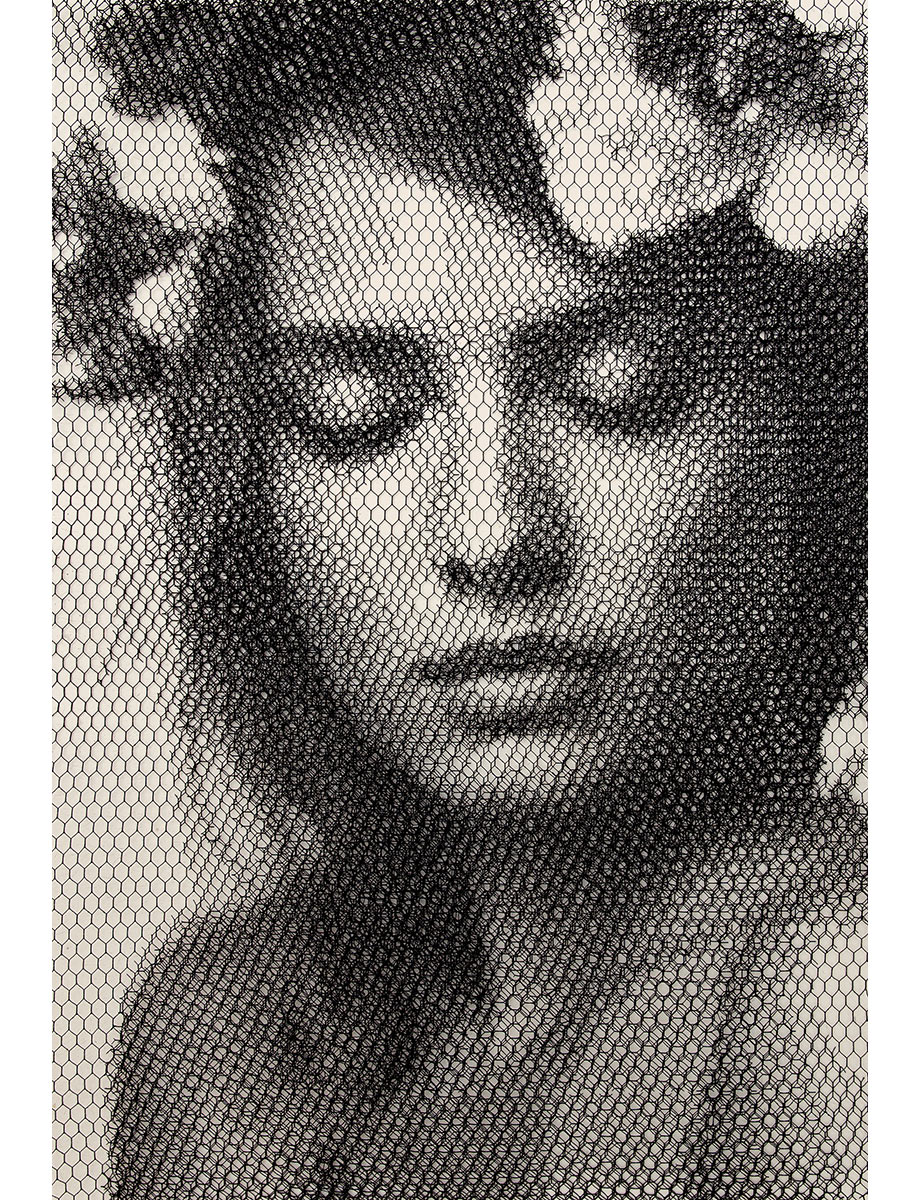
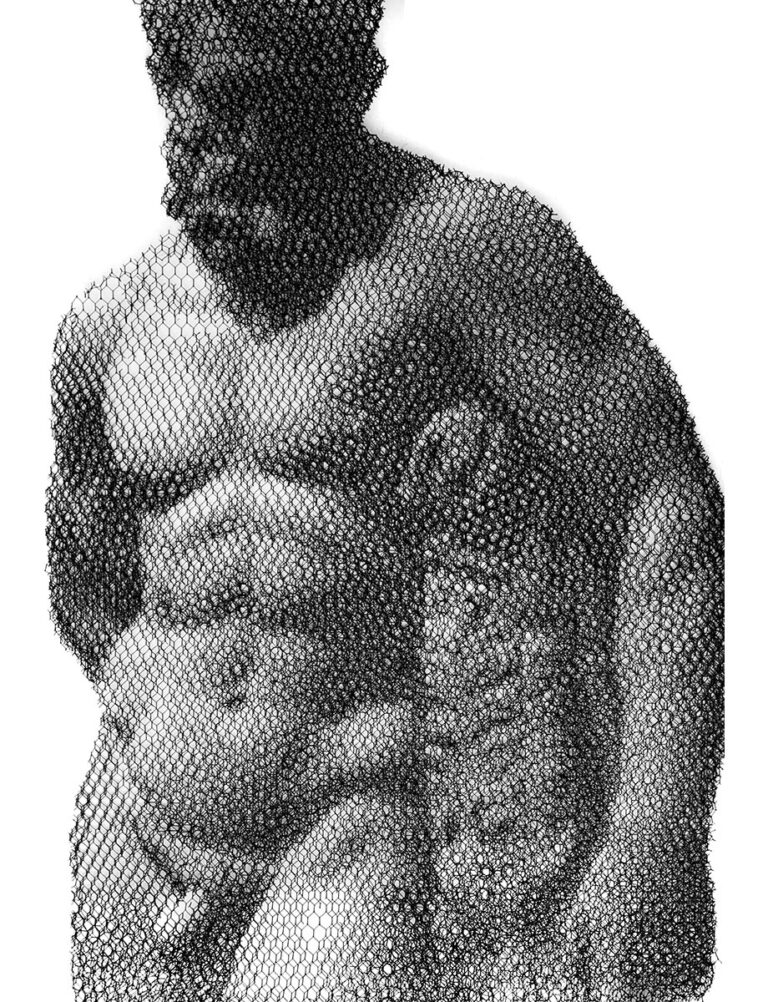
Bacchus embodies intensity, excess, the suspension of rules. It is the vital force that crosses the body without measure, exposing it to risk as much as expanding it. This figure introduces a fundamental tension: the body is not only a place of balance, but also of deviation, behavior, choice. Life never exists in a neutral form, but always as an oscillation between control and loss, between order and impulse. In this perspective, the experience of the body also includes what exceeds: what escapes regulation, what tests stability, what continuously redefines the limit. The metal mesh constructs a vibrating image, crossed by an internal tension. The face does not appear completely stable, but seems to move within the structure that supports it, as if captured in a moment of alteration.
BACCHUS – ALGOR. 3011510 (EÍDŌLON), 2024
hand-cut black wire mesh on wisteria background
125 × 85 cm.
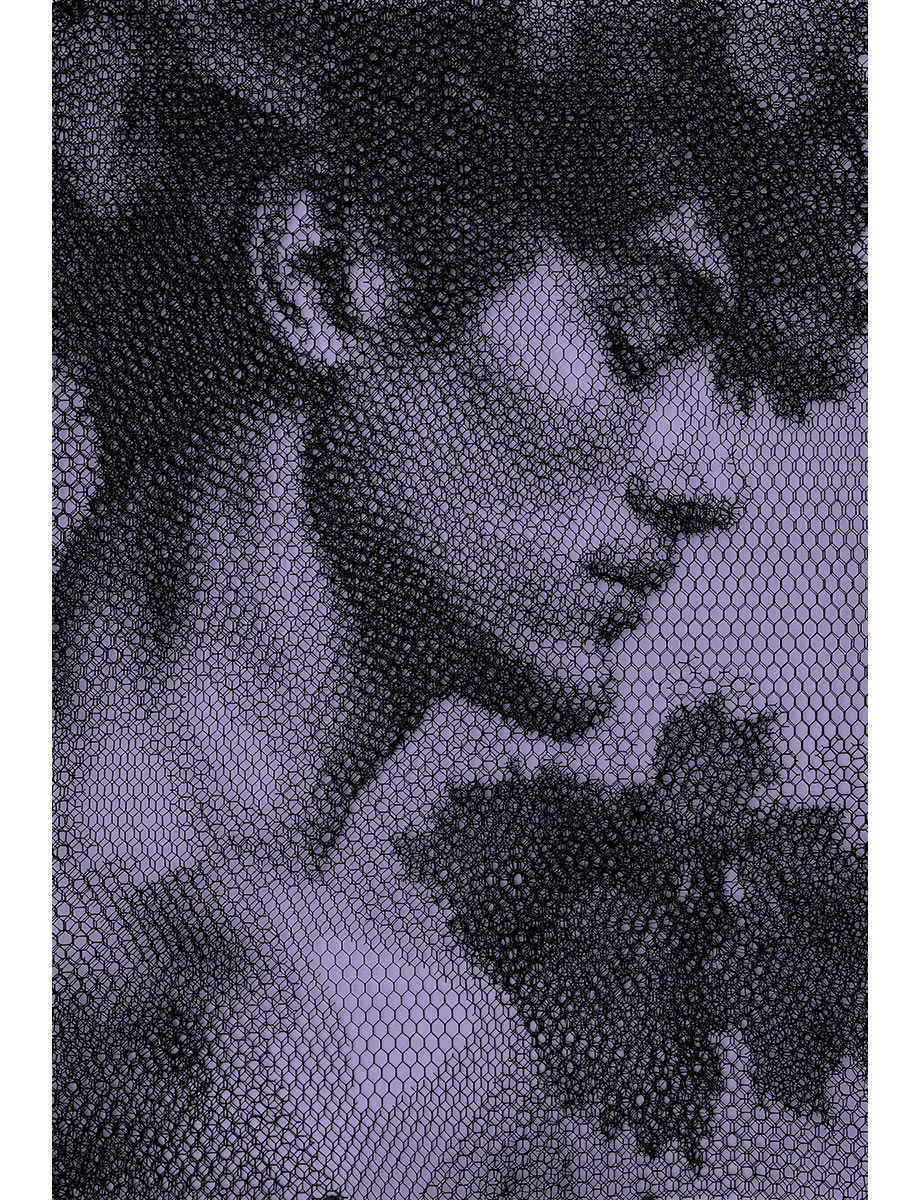
Aphrodite is the figure of beauty and relation. Her body is not only form, but a place of identification, recognition, and construction of the gaze.
Here the body is understood as an image of the self: something that does not merely exist, but is perceived, interpreted, and returned through the gaze of others. The aesthetic dimension thus becomes an integral part of experience.
This is not about superficiality, but about identity. The way the body appears and is recognized deeply affects the possibility of inhabiting oneself, of entering into relation, of existing without distance or fracture.
The metal mesh introduces an evident mediation. The face is both defined and filtered, as if always crossed by an external gaze. The image is constructed between presence and fabrication, between reality and model.
AFRODITE DI MENOPHANTOS – VISTA 252295 (PAGAN POETRY), 2025
hand-cut black wire mesh on white background
85 × 125 cm.
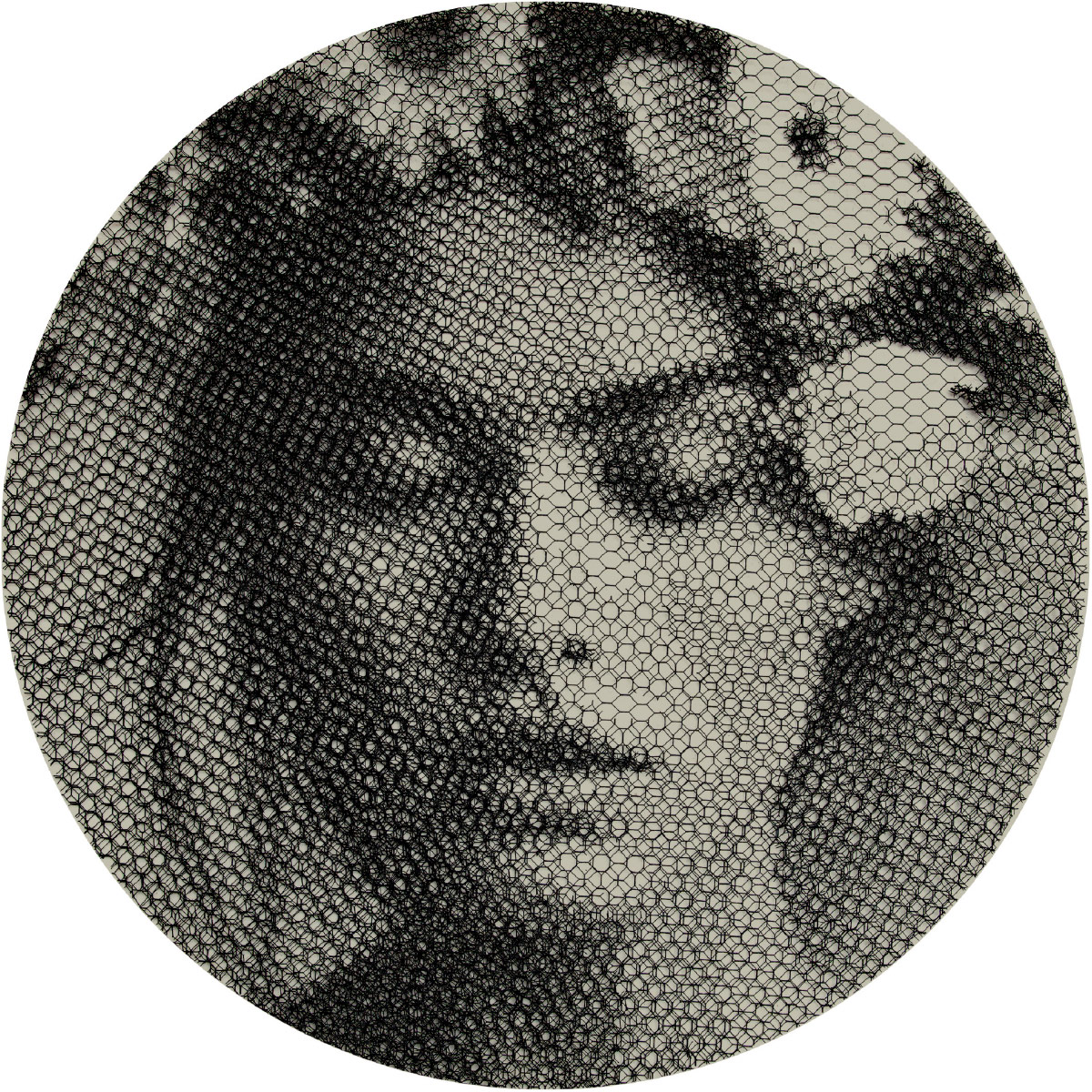
The nymph is an unstable presence, a figure of transition. It is not completely defined, it does not belong to a fixed identity: it appears, transforms, withdraws.
It represents a body in becoming, not yet stabilized. Identity is not something given, but a continuous process, constructed through relationships, contexts, and transformations.
This dimension reflects a contemporary condition in which the body is no longer only biological, but also image, perception, cultural construction. It is something constantly redefined.
The metal mesh amplifies this instability. The face does not impose itself, but emerges as a possibility. It is not fully graspable, but remains suspended between presence and dissolution.
LA NYMPHE – ALGOR. 6632215 (EÍDŌLON), 2025
hand-cut black wire mesh on khaki background
Ø 95 cm.
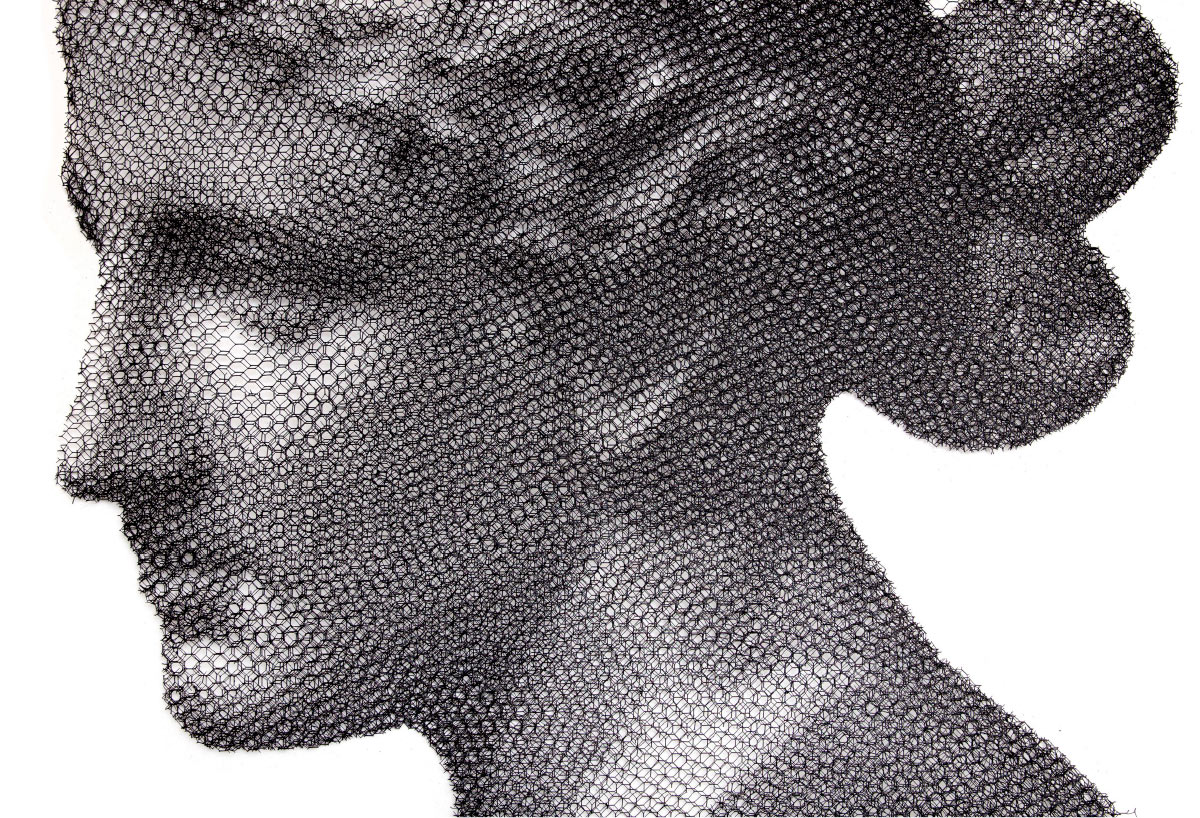
Eros is the force that creates connection, that drives toward the other. It is not only desire, but a generative principle: that which activates movement, creates bonds, and makes life as a shared experience possible. The body, in this perspective, does not exist in isolation. It is always in tension toward something: toward another body, toward a space, toward a possibility of contact.
This dimension is central: to live does not only mean to maintain a condition, but to be able to share it. The quality of life is also measured in the possibility of relation, in the freedom to express proximity, affection, desire.
The metal mesh does not close the image, but connects it. The face emerges clearly, yet remains embedded in a broader structure, as if part of a relational system. It is never completely separate.
EROS TIPO CENTOCELLE – VISTA 132321 (PAGAN POETRY), 2026
hand-cut black wire mesh on white background
85 × 125 cm.